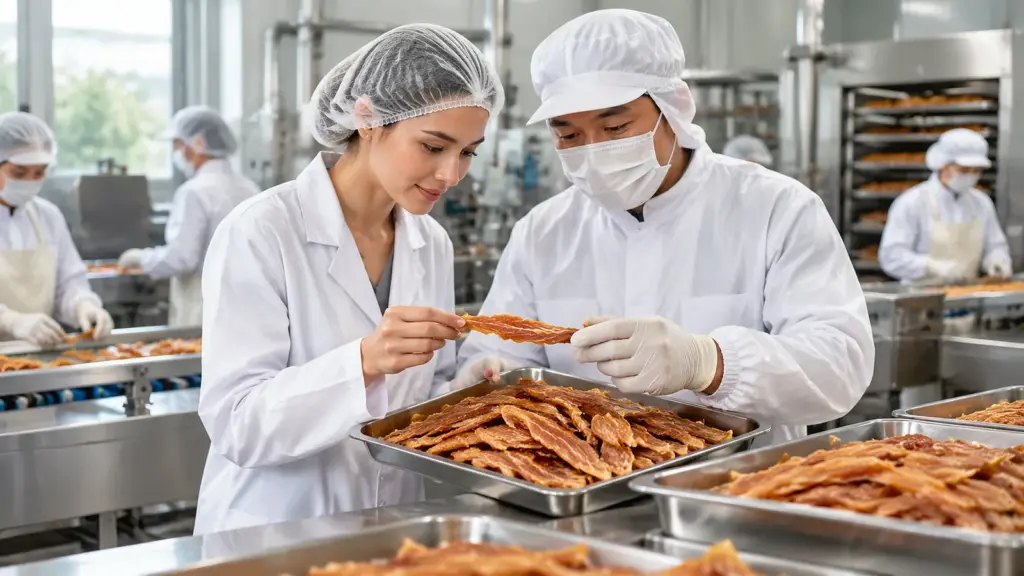
To choose a dog treat manufacturer in China, verify five things before you talk price: that you are dealing with the factory itself, that its food-safety certificate is genuine and its scope covers your product, that it can meet the registration rules of your market, that its raw-material and testing controls hold up on paper and on the floor, and that its capacity, MOQ and documentation fit your program. The checklist below walks through each step, the documents to request, and the red flags that should end a conversation.
Key takeaways
- Certificates matter only if the scope matches your product. A BRCGS or FSSC 22000 certificate for biscuits says nothing about a jerky line.
- Verify certificates on the scheme owner’s own database (for BRCGS, the BRCGS Directory), not from a PDF alone.
- US importers carry legal duties of their own under FSVP. Pick a supplier whose records make your verification work easy.
- Test samples at an independent lab before you sign, then write batch COAs and retained samples into the contract.
- Most sourcing problems come from trading companies posing as factories, vague specs and missing paperwork, not from the country of origin.
Why Source Pet Treats from China (and When Not To)
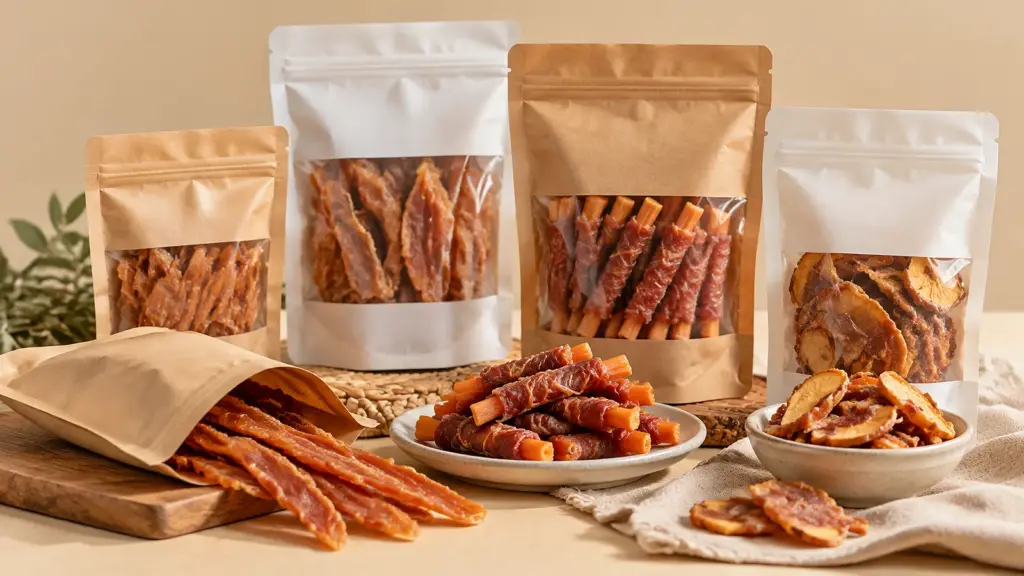
China is one of the world’s largest producers of dried meat pet treats, and the supply base around Shandong province is especially deep in poultry, duck and wrapped formats. Buyers source there for three practical reasons: a wide range of ready formulas and shapes (jerky, wrapped chews, slices, rolls, biscuits), competitive landed cost at mid-size volumes, and factories that already run export documentation every week.
China is not the right answer for every program. Consider sourcing closer to home if:
- Your brand promise is “Made in USA” or “Made in EU.” No supplier choice abroad can fix that positioning.
- Your volume is very small. If you need 50 kg per SKU, a domestic co-packer or a stock-product distributor may be simpler than an ocean container program.
- Your target market restricts the protein from China. Some markets limit which Chinese facilities or animal products can enter. Check your destination’s rules first. Our guide to importing dog treats into the US covers the US side.
If none of those apply, the real question is which factory, not which country. The rest of this guide is about making that choice with evidence.
Factory vs Trading Company: How to Tell
Many “manufacturers” on B2B marketplaces are trading companies. Traders are not bad by default, since some add real value in consolidation and QC. But if you think you are buying direct and you are not, you lose control of the process, the paperwork, and the ability to fix problems at the source. Check these points:
- Business license. Ask for the Chinese business license (营业执照) and read the registered business scope. A manufacturer’s scope normally includes production or processing of pet food; a pure trader’s scope reads “sales” or “import and export.”
- Name match. The company name on the license, the food-safety certificate, the export registration and your proforma invoice should be the same legal entity. A mismatch is the most common sign of a middleman.
- Address match. The certificate address should be a production site, not an office tower. Look it up on a map; a factory has loading docks and cold storage, not a lobby.
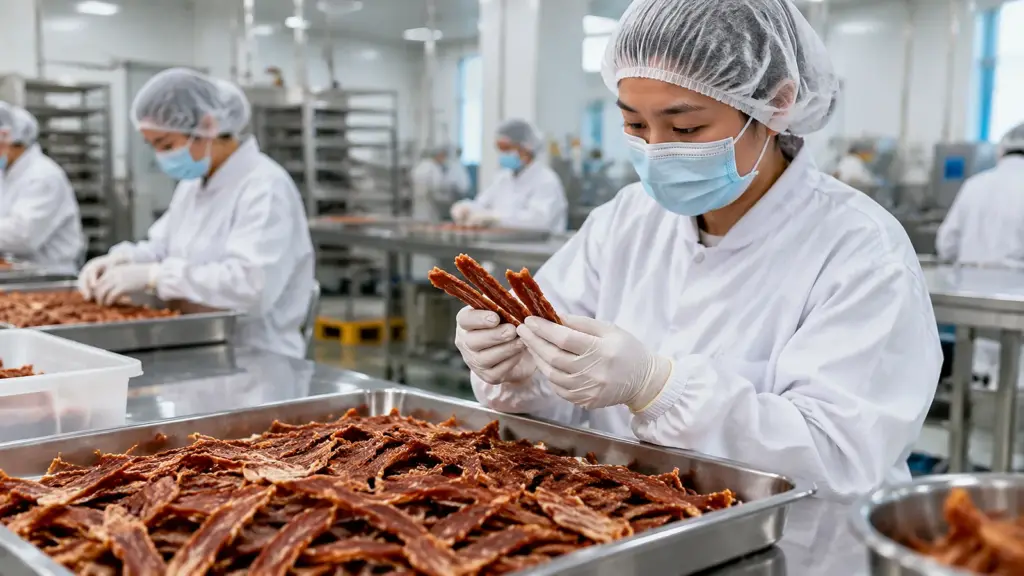
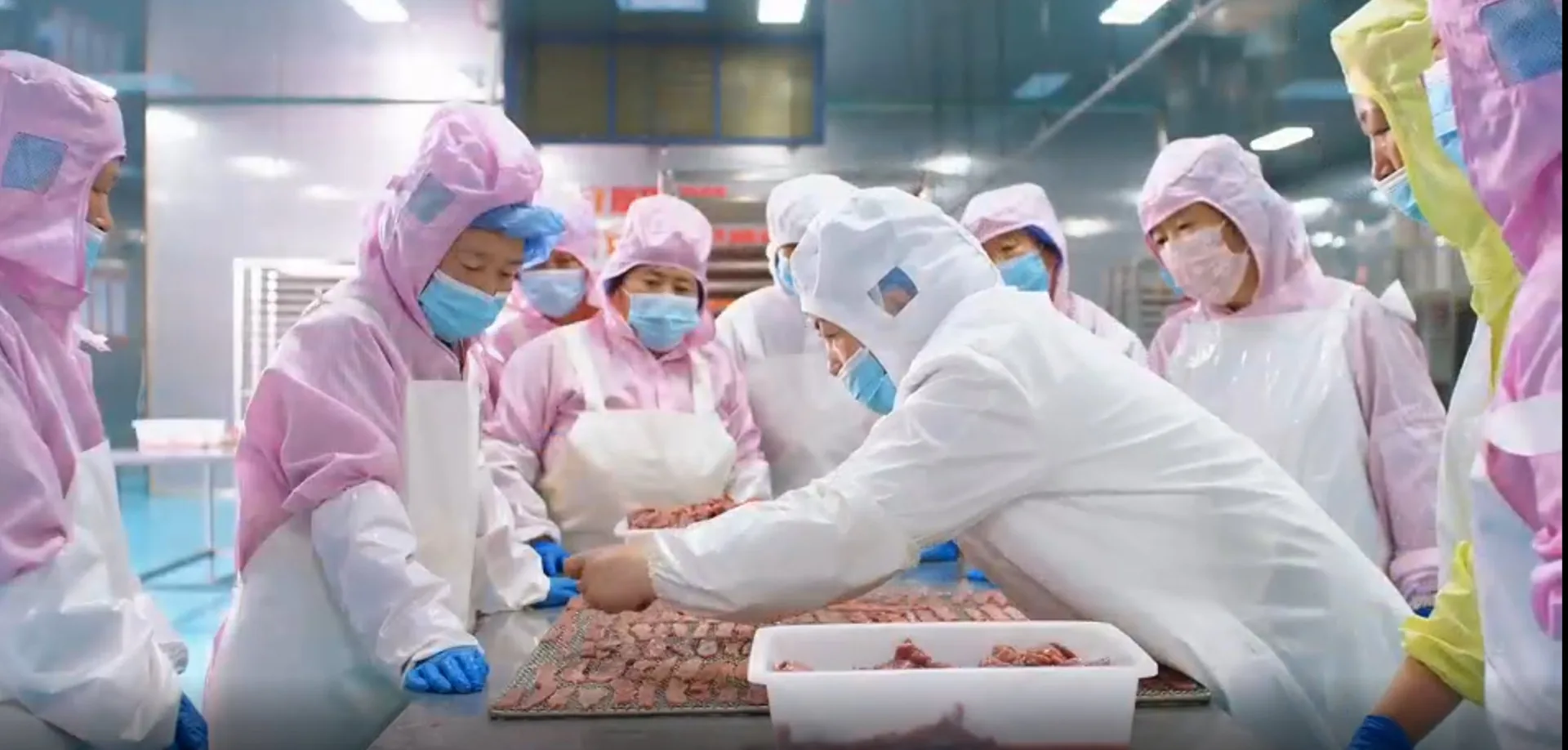
- Live video tour. Ask for an unscheduled live video call from the production floor: raw-material receiving, cold storage, cutting, drying rooms, metal detection, packing. A factory can do this within a day. A trader usually needs “time to arrange.”
- Who answers technical questions. Ask about drying temperature and time for a given product, target moisture or water activity, and how they validate the kill step. Factory QA people answer directly; traders forward the email.
The 10-Point Checklist
Use these ten points to compare shortlisted suppliers side by side. The summary table at the end of this section doubles as a scoring sheet.
1. Food-safety certification and its scope
Look for a certificate under a GFSI-benchmarked scheme such as BRCGS Food Safety, IFS Food or FSSC 22000. These involve annual third-party audits against a detailed standard. ISO 22000 and HACCP certificates are useful supporting evidence but are less prescriptive on their own.
Then read the scope line, which is where most buyers stop too early. A certificate lists the processes and product categories it covers, for example “thawing, slicing, drying, sorting and packing of dried duck breast pet food.” If you plan to buy chicken-wrapped rawhide or baked biscuits, ask whether those lines sit inside the audited scope or outside it.
How to verify a BRCGS certificate: ask the supplier for the certificate and its BRCGS site code, then search the BRCGS Directory (a free Directory Lite account gives you search access). Confirm the site name, address, certification body, grade, scope and expiry date. BRCGS states that a site code that cannot be found in the Directory is either wrong or not legitimate. For other schemes, use the scheme owner’s database (FSSC 22000 has a public register) or email the certification body directly with the certificate number.
2. Export registrations for your market
Every destination has its own gate. For the US, facilities that manufacture, process, pack or hold animal food for US consumption must register with FDA, and the US importer must meet Foreign Supplier Verification Program (FSVP) duties. The EU, UK, Japan and Korea each have separate listing or approval rules for animal by-products and pet food from China. On the Chinese side, exporters of pet food are registered with China Customs (GACC/CIQ).
Ask each supplier which registrations it holds for your specific market, then verify each one with the relevant authority or your customs broker. Keep in mind that FDA registration is a listing, not an approval. FDA does not “certify” factories, so any supplier claiming to be “FDA certified” or “FDA approved” is misusing the term. Always check the current official requirements for your market before you order; rules change.
3. Raw material sourcing and residue testing
Meat quality decides treat quality. Ask:
- Where does the meat come from? Are the slaughterhouses licensed, and can the supplier name them?
- What documents come with each raw-material lot (quarantine certificate, supplier COA)?
- How long between slaughter and processing, and how is meat stored?
- Which residue tests are run (for example veterinary drug and antibiotic residues), on what frequency, and by which lab?
Residue control is a sensitive point for dried poultry treats because of the FDA jerky investigation. We cover the history and what changed in Are Dog Treats Made in China Safe? Do not accept “we test everything.” Ask for the test panel, the method and a recent report, and agree the panel in writing.
4. Process control and cleanroom class
For dried treats, the critical control points are usually thawing, the drying or baking kill step (time and temperature), final moisture or water activity, metal detection and packing. Ask to see:
- The HACCP plan and the CCP monitoring records for a recent batch.
- How the drying step is validated to control pathogens such as Salmonella.
- Moisture or water activity specs and how often they are checked.
- Metal detector test logs (test pieces, frequency, reject handling).
- Hygiene zoning between raw and cooked areas, and the cleanroom class of the packing area.
5. Traceability system
Ask the supplier to run a mock trace in front of you: pick a finished-goods lot code and have them show the raw-material lots, production date, drying records, lab results and shipment it went into. Factories with MES, ERP and WMS systems can do this in minutes; paper-based plants take hours or days. In a recall, that difference matters.
6. R&D capability
If you want your own formula, functional claims or new shapes, you need a supplier with real R&D, not only a sample room. Ask who develops formulas, how long they have worked in pet nutrition, what lab equipment they have and how they run shelf-life trials. For simple white-label programs, R&D matters less than consistency.
7. Capacity vs your volume
You want to be a meaningful customer, not a rounding error or a risk. Ask for annual capacity, current utilization and the peak-season lead time (Q3–Q4 is busy for holiday programs). A good fit is when your forecast is large enough to get attention but small enough that the plant can absorb growth.
8. MOQ and sample lead time
Typical private label MOQs for dried treats in China run from a few hundred kilograms to a ton or more per SKU. Samples usually take two to three weeks and mass production about a month or more after artwork approval. Get MOQ, sample cost, sample timing and production lead time in writing. Our MOQ and cost guide breaks down what drives these numbers.
9. Export experience in your market
A supplier who ships to your market every month already knows the label conventions, the documents your broker needs and the common inspection issues. Ask which markets it exports to, what documents it provides for your market, and whether it can supply a reference (with the customer’s permission).
10. Communication and documentation
Measure response time and quality during quoting; it will not improve after you pay a deposit. Good suppliers send a product specification sheet, ingredient list, guaranteed analysis draft, packaging spec and a sample COA without being chased. Check that they can review your label against your market’s rules. See our dog treat label requirements guide for what US labels must show.
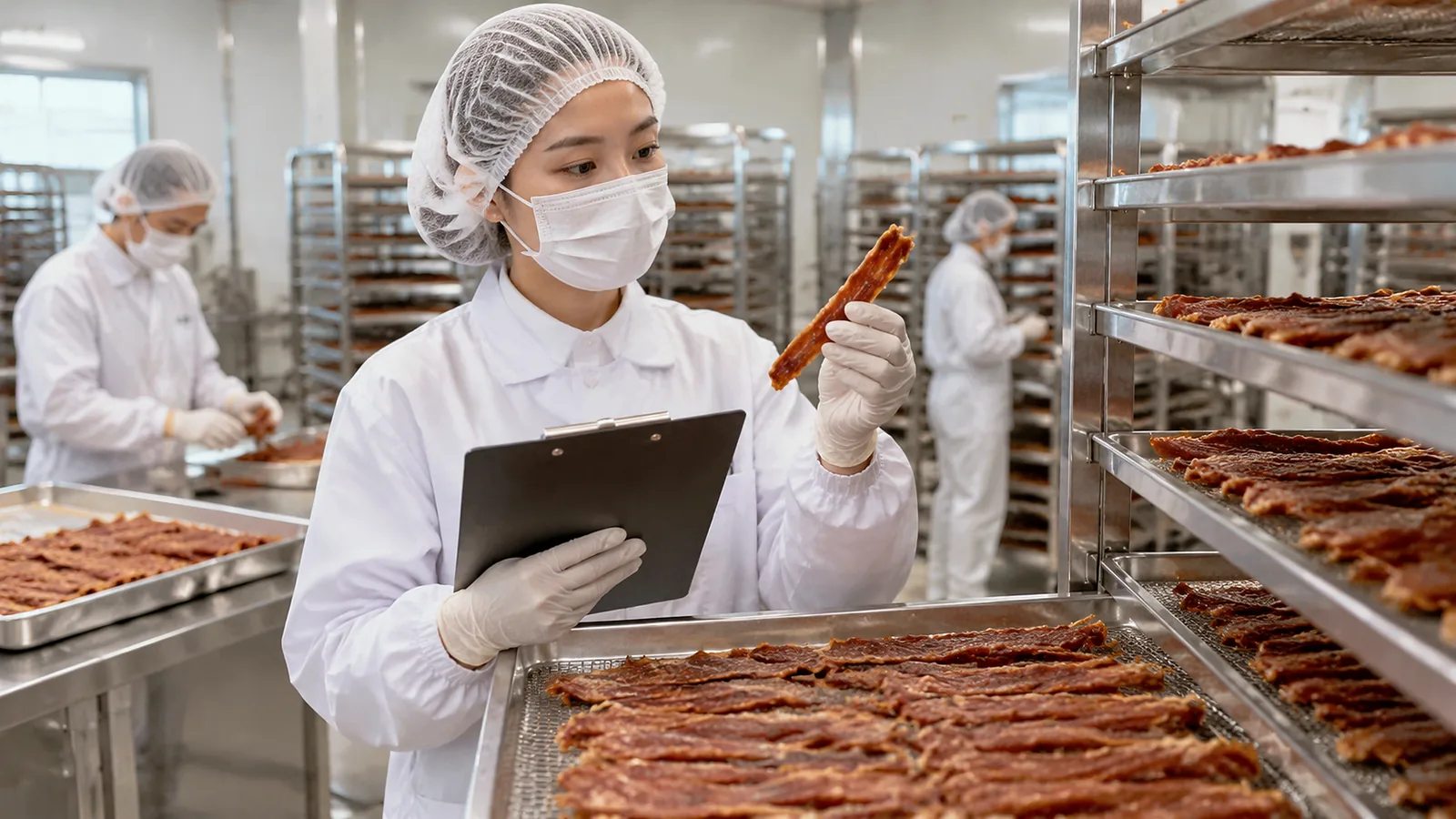
Checklist summary: what to request and how to verify
| Checkpoint | Documents to request | How to verify | Pass signal |
|---|---|---|---|
| Factory, not trader | Business license, factory address | License scope, map check, live video tour | Same legal entity on license, certificate and invoice |
| Food-safety certificate | BRCGS / IFS / FSSC 22000 certificate, latest audit grade | Scheme owner’s directory (BRCGS Directory, FSSC register) | Valid, in date, scope covers your product |
| Supporting systems | ISO 22000, ISO 9001, HACCP plan | Issuing body, CCP records for a recent batch | Records filled in real time, deviations handled |
| Market registrations | China Customs export registration; destination-market registrations | Relevant authority or your customs broker | Registrations confirmed for your market |
| Raw materials | Approved supplier list, quarantine certificates | Trace one raw lot back to its source | Named, licensed sources |
| Residue and micro testing | Test panel, recent in-house and third-party reports | Independent lab test on your own samples | Agreed panel in writing, results within spec |
| Process control | Kill-step validation, moisture/water activity specs, metal detector logs | Video or on-site review of the drying and packing lines | Validated parameters, consistent logs |
| Traceability | Mock recall result | Ask for a live trace of a random lot code | Full forward and backward trace in under an hour |
| Capacity and lead time | Annual capacity, peak-season lead time | Compare with your 12-month forecast | Your volume fits without straining the plant |
| Commercial terms | Quote with MOQ, sample terms, Incoterms, payment terms | Compare across 3 shortlisted suppliers | Terms in writing, no hidden surcharges |
Sampling and Testing Before You Sign
Samples are your first real data point. Run them in two rounds:
- Development samples. Check appearance, smell, texture, breakability, size consistency and palatability with a small dog panel. Confirm the exact recipe, meat content and target moisture in writing.
- Pre-production or first-batch samples. Take them from a real production run, not the sample room, and send them to an independent accredited lab. A sensible starting panel for dried meat treats is moisture and/or water activity, protein and fat (to check your guaranteed analysis), Salmonella and other microbiology relevant to your market, and a residue panel agreed with the supplier. International labs with Chinese branches (for example SGS or Intertek) can also test before shipment.
Keep retained samples from each batch on both sides. If a complaint arrives six months later, you will want the same lot to retest.
Contract and QA Terms to Put in Writing
A purchase order with only price and quantity invites trouble. At a minimum, agree on:
- Specification sheet for each SKU: ingredients and percentages, size and weight tolerances, moisture or water activity limits, guaranteed analysis, micro limits and residue limits.
- Batch documents: a COA for every lot, with the lab named, plus the export documents your broker needs.
- Change control: no change to raw-material source, recipe, process or packaging material without written approval.
- Pre-shipment inspection: your right to send a third-party inspector, and the sampling plan (for example AQL levels) used for visual defects.
- Non-conformance and recall: who pays for re-testing, replacement or destruction if a lot fails your spec, and how fast the supplier must respond with trace data.
- Audit rights: your right to audit on site or remotely with reasonable notice.
- Payment milestones: tie the balance payment to documents and inspection results, not only to the ship date.
If you are a US importer, these terms double as evidence for your FSVP file, since FDA expects importers to verify suppliers through audits, sampling and testing, or record review (see FDA’s FSVP rule overview).
Red Flags
- The certificate cannot be found in the scheme owner’s directory, or the name or address differs from the company you are paying.
- The certificate scope does not cover the product you are buying, and the supplier avoids the question.
- Claims of being “FDA certified” or “FDA approved.”
- No live video tour, or tours only of a showroom and packing table.
- “We test everything,” with no test panel, lab name or report.
- Prices far below other quotes for the same spec. Meat content, drying time and packaging are where corners get cut.
- Samples that look different from photos, or first-batch product that differs from approved samples.
- Payment requested to a personal account or a company name that does not match the contract.
- Unwillingness to sign a specification sheet or a change-control clause.
How SAGEIC Measures Up
We would rather you check us against this list than take our word for it. Here is what we can show a buyer today, and what you should confirm with us for your market.
| Checkpoint | SAGEIC (Qingdao, China) |
|---|---|
| Manufacturer or trader | Manufacturer with its own plant in Jimo District, Qingdao; live video tours on request |
| GFSI-scheme certificate | BRCGS Food Safety Issue 9, Grade B, certificate no. 0244974, issued by Intertek (UKAS 014), valid to 11 May 2027, verifiable on the BRCGS Directory |
| Certificate scope | Thawing, slicing, drying and sorting of duck breast pet food, packed in PE/PET bags. Ask us which of your SKUs fall inside it |
| Other systems | ISO 9001, ISO 22000, HACCP; China Customs (CIQ) export registration |
| Plant | 12,000+ m² floor area, Class 100,000 cleanroom workshop, digital production lines, 2,000+ tons annual capacity |
| Traceability | Batch traceability through MES, ERP and WMS |
| Testing | In-house lab for moisture, protein, fat and microbiology; third-party testing (SGS / Intertek) on request |
| R&D | Senior R&D staff with 20+ years in pet nutrition; joint pet precision-nutrition lab with China Agricultural University and Ocean University of China |
| MOQ and lead time | Private label MOQ usually from 500 kg per SKU (negotiable); samples in 2–3 weeks; production 30–45 days after artwork approval |
| Export markets | USA, Europe, Japan, Korea, Hong Kong, Southeast Asia. Confirm registrations for your destination with us during quoting |
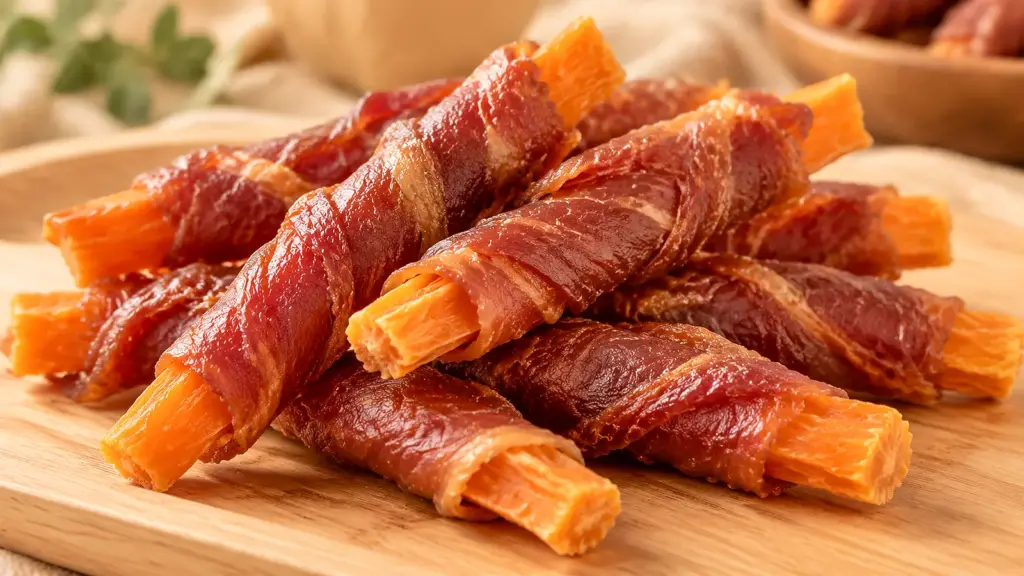
At our Qingdao plant, fresh meat reaches production within three days of sourcing, and duck is our core protein, from whole duck fillets to duck-wrapped sweet potato sticks. You can see the lines on our factory page and our certificates on the quality page. If you are planning a full private label launch, start with our private label dog treats guide or see how we run OEM and ODM projects.
FAQ
How do I find a reliable dog treat manufacturer in China?
Build a shortlist of three to five factories from trade shows, referrals and B2B platforms, then filter with the checklist above: verify the business license and certificate scope, run a live video tour, test samples at an independent lab and compare written terms. Reliability shows in documents and consistency, not in sales promises.
Is BRCGS better than ISO 22000 for a pet treat supplier?
BRCGS Food Safety is GFSI-benchmarked and more prescriptive, with annual unannounced or announced audits and a public directory, so many retailers prefer it. ISO 22000 is a sound management-system standard but is not GFSI-benchmarked on its own (FSSC 22000 adds the required extras). Holding both is common. What matters most is the scope and the audit grade.
Do Chinese pet treat factories need FDA approval?
No. FDA does not approve or certify pet food factories. Foreign facilities that make animal food for the US must register with FDA, and the US importer has FSVP obligations. Check the latest FDA requirements, or read our US import guide.
Should I visit the factory in person?
For a large or long-term program, yes, or hire a third-party auditor. For a first order, many buyers start with a live video audit, document review and independent sample testing, then visit before scaling up.
What is a normal MOQ for private label dog treats from China?
It varies by format and packaging, but a few hundred kilograms to around a ton per SKU is common for dried meat treats. At SAGEIC it is usually 500 kg per SKU, and we can discuss lower volumes for trial orders.
See our factory before you decide
Book a live video tour of our Qingdao lines and request our certificate pack: the BRCGS certificate, ISO and HACCP documents, and a sample spec sheet for the product you have in mind. We will answer every point on this checklist in writing.