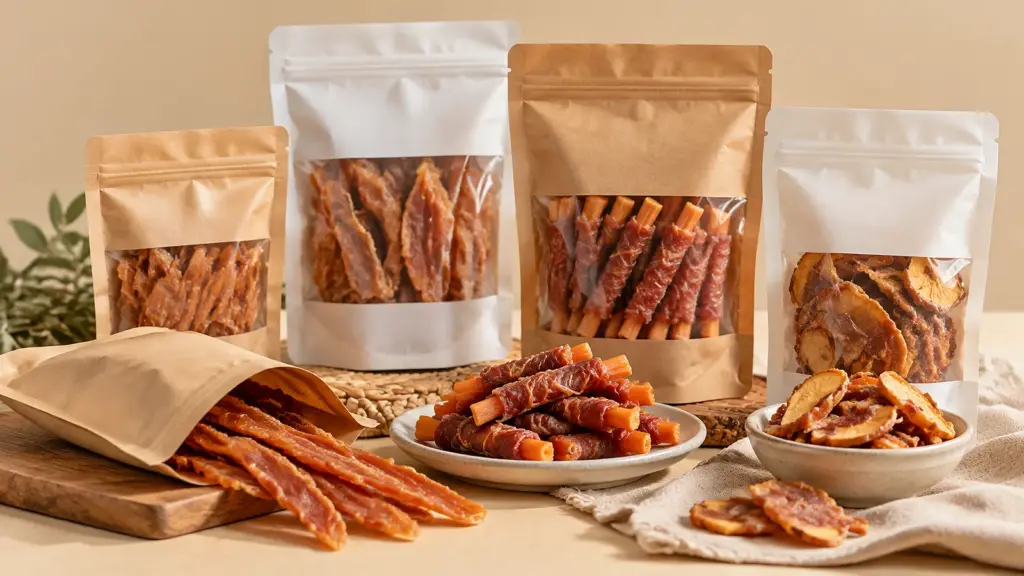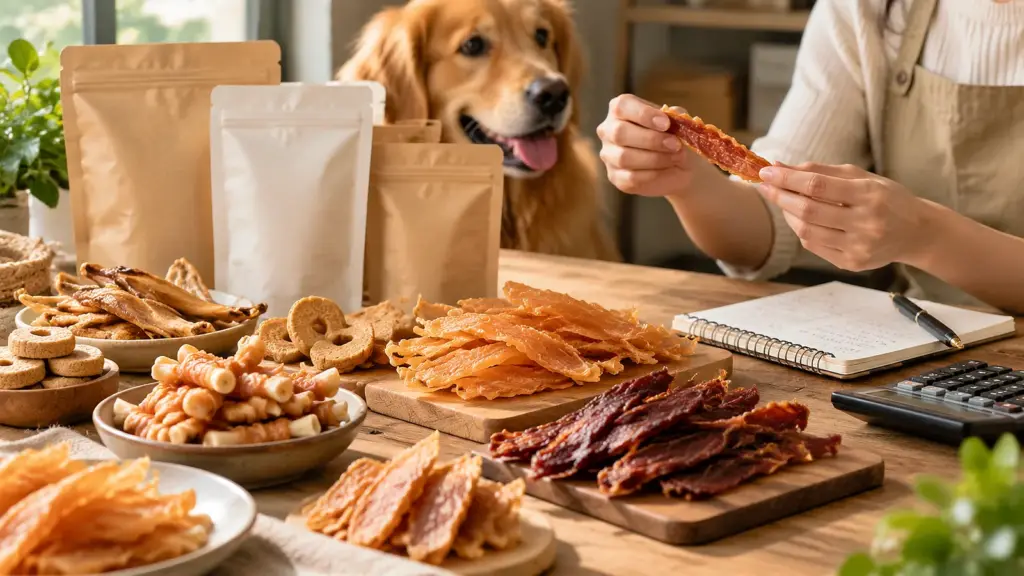
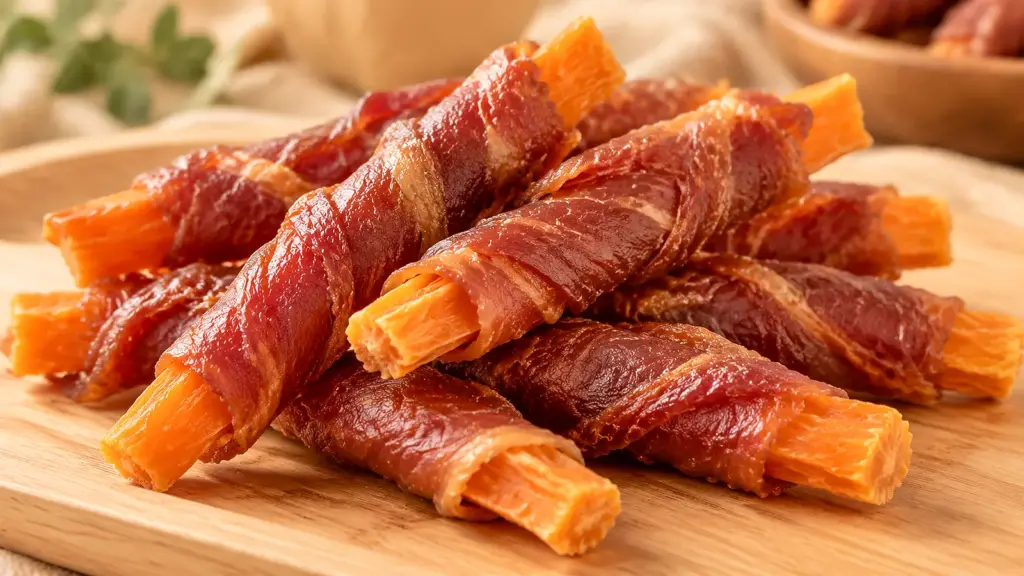
Wrapped dog treats are a slice of real meat, usually duck or chicken breast, wound by hand around a core such as sweet potato, rawhide, trachea, fruit or a biscuit, then dried at low temperature. For buyers, duck wrapped sweet potato dog treats are the category’s volume anchor, but the core you choose changes everything else: protein level, chew time, positioning and even which safety questions customers will ask. This guide breaks down each core type using real ingredient ratios and specs.
Key takeaways
- Most wrapped treats are about 55–63% meat by weight, with the core making up 34–42%. Check the ratio on the spec sheet.
- Vegetable and fruit cores give about 30% protein and a soft chew. Rawhide cores give 57–58% protein and the longest chew. Trachea and rabbit-ear cores sit in between, with a crunchy texture.
- Wrap tightness, meat detaching from the core, and core moisture are the main quality failures. Put them in your acceptance criteria.
- Rawhide-wrapped SKUs sell well, but they need honest on-pack feeding guidance. Supervision and size matching are the key messages.
- The category’s history (FDA’s jerky investigation included wrapped products) means buyers should expect questions about origin and testing, and have answers ready.
What Are Wrapped Dog Treats?
A wrapped treat combines two textures and two stories in one piece: meat on the outside for aroma and appeal, and a core that adds sweetness, fiber, crunch or chew time. The meat is sliced thin from whole breast (no restructured paste on good-quality lines), wound around the core by hand, then dried slowly so the meat shrinks tightly onto it.
Wrapped treats have remained a staple of Asian-made treats for a simple reason: the wrapping step is almost entirely manual. The product depends on skilled, consistent hand labor at scale, and that is where established treat plants in China and Southeast Asia compete. For a brand, it means you can offer eight or ten visually distinct SKUs from the same two meats.
Core Types
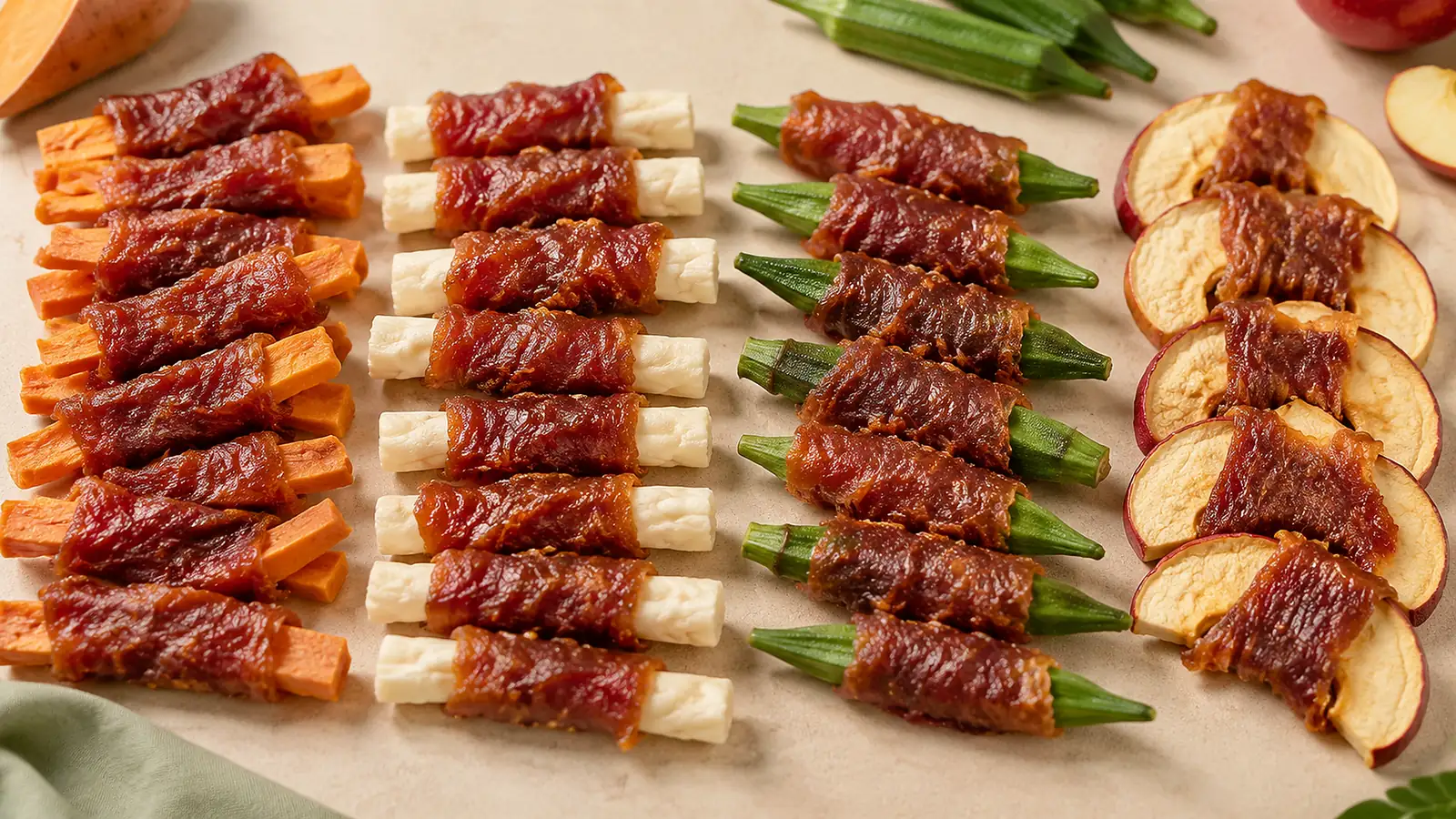
Wrapped sweet potato, pumpkin and kabocha
This is the best-selling group. A stick of sweet potato, pumpkin or kabocha squash is wrapped in duck or chicken breast. The core stays soft and sweet, and the meat dries firm and chewy. Duck-Wrapped Sweet Potato Sticks are 61% duck breast and 36% fresh sweet potato. Chicken-Wrapped Sweet Potato Sticks are 62% chicken breast and 35% sweet potato. The same core also comes as rings (Duck-Wrapped Sweet Potato Rings, Duck Donuts), which are easier for small dogs to hold. Pumpkin and kabocha versions give you a seasonal or “autumn” story at the same spec.
Wrapped fruit and veg: apple and okra
Duck-Wrapped Dried Apple (63% duck, 34% dried apple) and Duck-Wrapped Okra (60% duck, 37% fresh okra) are differentiators more than volume drivers. They photograph well, suit “garden” or “farmers’ market” branding, and the okra version is also sold for cats. Nutritionally they behave like the sweet potato wraps: about 30% protein and up to about 10% fiber.
Wrapped rawhide sticks and rolls
Wrapping a puffed beef-hide stick in meat creates a long-lasting chew. Duck-Wrapped Rawhide Sticks are 56% duck breast and 41% puffed beef hide. Duck-Wrapped Natural Rawhide Rolls use unbleached, natural-color hide. Chicken Breast Rawhide Sticks follow the same build with chicken. Because dried hide is mostly collagen, protein jumps to 57–58%. Rawhide is also the most debated core (see the safety section below).
Wrapped trachea and rabbit ears
Natural cartilage cores give a crunchy-chewy bite and are often positioned around chewing and dental routines. Duck-Wrapped Trachea is 55% duck breast around 42% duck trachea, so it is a single-protein duck SKU. Chicken-Wrapped Trachea uses chicken. Chicken-Wrapped Rabbit Ears combine 56% chicken breast with 41% whole rabbit ear. It is a good bridge SKU if you also sell plain rabbit ears.
Wrapped biscuit rings and egg yolk
Duck-Wrapped Goat Milk Biscuit Rings wrap 57% duck around a 39% lamb and goat-milk biscuit, giving a crunchy center under chewy meat. Duck-Wrapped Egg Yolk wraps 60% duck around a 37% whole egg yolk. It has a noticeably higher fat level (≥8%) and a rich, dense center that both dogs and cats accept well. Neither is single-protein, so keep them out of a limited-ingredient range.
Wrapped Treat Specs Compared
All figures come from the guaranteed analysis and ingredient declarations of SAGEIC wrapped SKUs. Protein and fat are minimums, and fiber and moisture are maximums.
| Product | Meat : core | Protein (min) | Fat (min) | Fiber (max) | Moisture (max) | Chew profile |
|---|---|---|---|---|---|---|
| Duck-Wrapped Sweet Potato Sticks | 61 : 36 | 30.0% | 3.0% | 9.5% | 22.0% | Soft core, quick |
| Chicken-Wrapped Sweet Potato Sticks | 62 : 35 | 30.5% | 3.0% | 9.5% | 22.0% | Soft core, quick |
| Duck-Wrapped Sweet Potato Rings | 62 : 36 | 30.0% | 3.0% | 9.0% | 22.0% | Soft, easy to hold |
| Duck-Wrapped Pumpkin Sticks | 62 : 35 | 30.0% | 2.9% | 9.8% | 22.0% | Soft core, quick |
| Duck-Wrapped Kabocha Squash | 62 : 35 | 30.0% | 2.9% | 9.8% | 22.0% | Dense core, quick |
| Duck-Wrapped Dried Apple | 63 : 34 | 30.0% | 2.9% | 9.5% | 22.0% | Chewy, quick |
| Duck-Wrapped Okra | 60 : 37 | 30.0% | 2.8% | 10.0% | 22.0% | Tender, quick |
| Duck-Wrapped Egg Yolk | 60 : 37 | 38.0% | 8.0% | 4.0% | 21.0% | Dense, medium |
| Duck-Wrapped Goat Milk Biscuit Rings | 57 : 39 | 32.5% | 4.3% | 7.8% | 22.0% | Crunchy center, medium |
| Duck-Wrapped Trachea | 55 : 42 | 45.0% | 3.2% | 4.5% | 21.0% | Crunchy-chewy, medium |
| Chicken-Wrapped Trachea | 55 : 42 | 45.0% | 3.3% | 4.5% | 21.0% | Crunchy-chewy, medium |
| Chicken-Wrapped Rabbit Ears | 56 : 41 | 46.0% | 3.5% | 4.0% | 21.0% | Crunchy cartilage, medium |
| Duck-Wrapped Rawhide Sticks | 56 : 41 | 57.0% | 3.0% | 4.0% | 21.0% | Long-lasting |
| Duck-Wrapped Natural Rawhide Rolls | 57 : 40 | 58.0% | 2.9% | 4.0% | 21.0% | Long-lasting |
| Chicken Breast Rawhide Sticks | 55 : 42 | 58.0% | 3.2% | 4.0% | 21.0% | Long-lasting |
The remaining 2–4% in each recipe is food-grade glycerin with a little sorbitol, which keeps the meat pliable. “Chew profile” is a relative guide for range planning, not a measured chew time. Actual duration depends on piece size and the dog.
How They’re Made
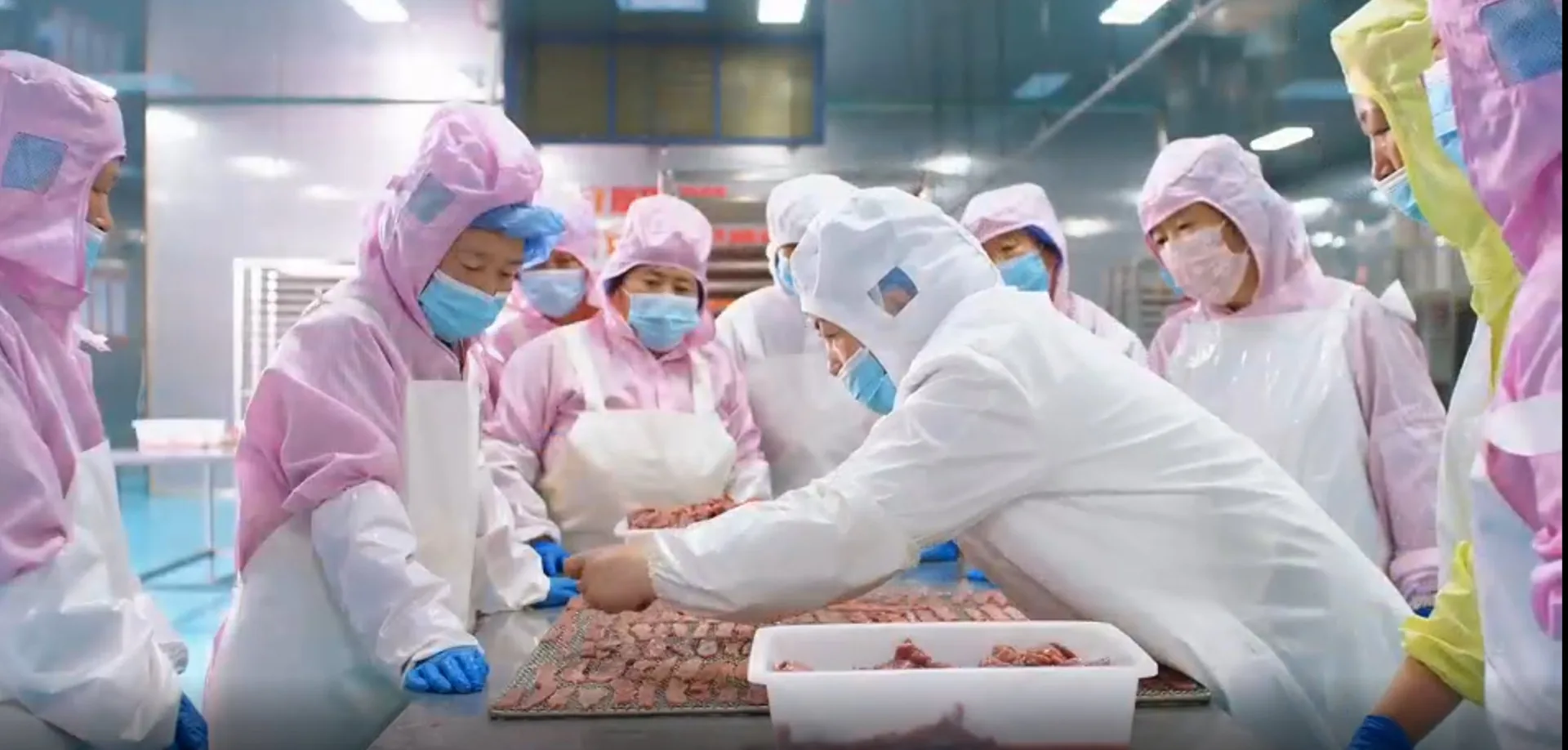
- Core preparation. Vegetables are washed, cut to size and pre-cooked or pre-dried so the core and the meat finish drying at the same time. Rawhide is cleaned, puffed and cut, and trachea and ears are cleaned and trimmed.
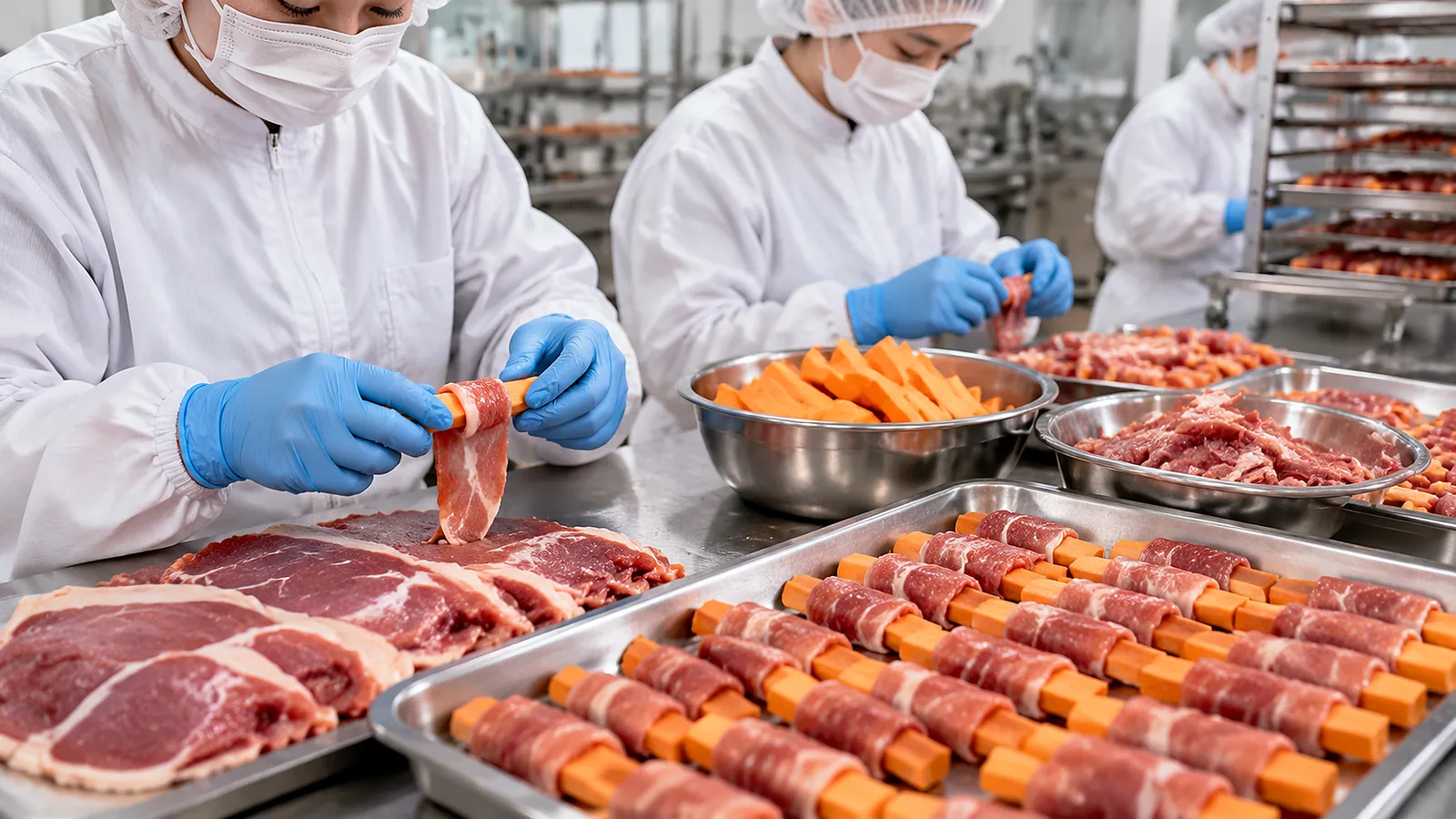
- Meat slicing. Frozen breast is tempered and sliced into long, even sheets. Consistent thickness is the single biggest factor in drying consistency.
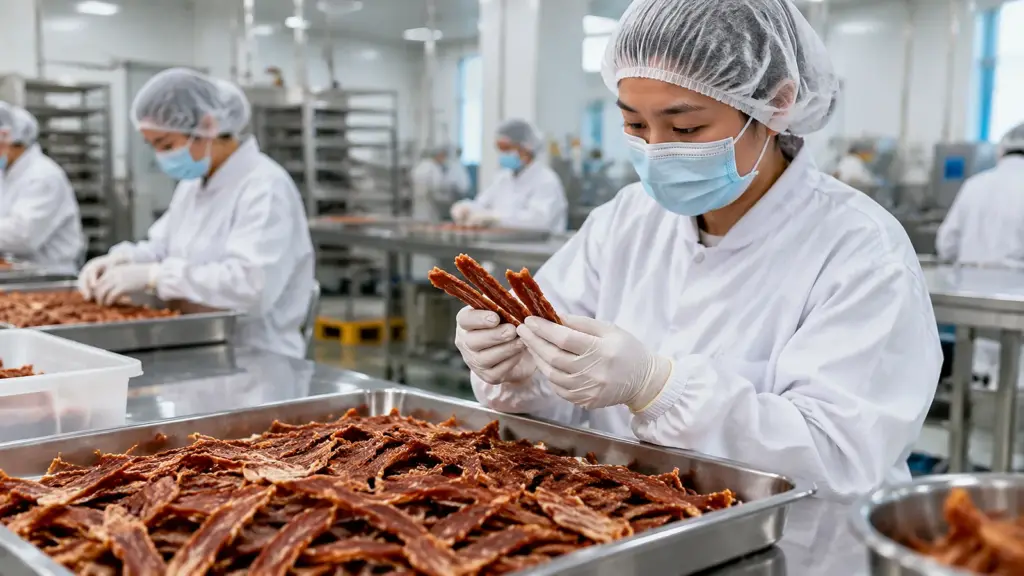
- Hand wrapping. Operators wind the meat around the core with a set overlap and tuck the end under. A skilled team produces uniform pieces. An unskilled one produces loose spirals that fall apart in the bag.
- Low-temperature drying. Pieces are dried on racks until they reach the target moisture. As the meat shrinks, it grips the core.
- Selection, metal detection and packing. Broken, loose or off-color pieces are removed before the product is metal-detected and packed, often with nitrogen flushing and an oxygen absorber.
At our Qingdao plant, wrapped treats are made in the same Class 100,000 cleanroom facility as our duck breast treats, under the same ISO 22000 and HACCP systems. Our BRCGS certificate’s audited scope is the thawing, slicing, drying and selecting of duck breast pet food; ask us which SKUs fall within it when you plan your range. For the wider duck category, see our duck dog treats wholesale guide.
Quality Points Buyers Check
- Meat-to-core ratio. Ask for the ratio as a percentage in the ingredient declaration and check it by weighing a sample. A cheaper quote often means thinner meat and a bigger core.
- Wrap tightness and coverage. Set a maximum allowed exposed-core gap and a minimum overlap. Photo standards work better than words.
- Detachment. Meat unwinding from the core during transit is the most common complaint. Set a limit on loose pieces per bag and check it after a shake or drop test.
- Moisture and water activity, of the core as well as the meat. A sweet potato core that is still too wet is where mold starts. Include water activity in the spec, not just moisture.
- Microbiology and foreign bodies. Salmonella-negative results per lot, plus metal detection on every pack. The same rules apply as for any meat treat.
- Color and size consistency. Retail window bags make variation obvious to shoppers. Agree on a color range and a pieces-per-kilo tolerance.
Our manufacturer selection checklist covers how to audit these points on site.
Sweet Potato Wraps and the Jerky Investigation
If you sell wrapped treats, you will be asked about this. Starting in 2007, the US FDA received thousands of reports of illness in dogs that had eaten jerky treats. Its investigation covered chicken, duck and sweet potato jerky, and also “treats where chicken or duck jerky is wrapped around dried fruits, sweet potatoes, yams, or rawhide”. Many of the products were imported from China. FDA’s testing did not identify a root cause, and the agency lists the investigation as ongoing. See the FDA jerky pet treats page for the current status.
That history is why serious buyers now ask for traceable raw materials, certified plants, per-lot testing and export registration, and why these questions belong in your supplier approval. We discuss what has changed since then in Are Dog Treats Made in China Safe?. For US import steps, see FDA, FSVP and prior notice.
Rawhide Safety: What to Tell Your Customers
Rawhide-wrapped treats sell because they last longer and have a clear value story. Rawhide also has vocal critics. A balanced position protects your brand:
- The real risks are mechanical. The main concern is a dog swallowing a large piece, which can cause choking or a gastrointestinal obstruction. The ASPCA’s position on dog chews advises limiting how much rawhide a dog eats at one time, discouraging dogs from swallowing large pieces, and matching the chew to the dog’s size and chewing habits.
- Processing matters. Ask how the hide is cleaned and puffed, and whether any bleaching agents or chemical treatments are used. Natural-color, unbleached hide is easier to explain on the pack.
- Put feeding guidance on the pack. “Supervise your dog while chewing. Choose a size that suits your dog. Remove the last small piece. Provide fresh water.” This is honest and costs you nothing.
- Offer an alternative. If your customers include rawhide-averse shoppers, trachea and rabbit-ear wraps give a longer chew without hide, and sweet potato wraps cover the soft-chew end.
Avoid calling a rawhide treat “fully digestible” or “vet-approved” unless you hold data that supports the claim. See our label requirements guide.
FAQ
What is the typical meat content of duck wrapped sweet potato dog treats?
Well-made versions are around 60–62% duck breast and 35–36% sweet potato, with the rest being a small amount of glycerin and sorbitol for pliability. That gives roughly 30% crude protein and up to 22% moisture.
Are chicken wrapped and duck wrapped treats interchangeable?
They are built the same way and have near-identical specs. Duck supports single-protein and “alternative to chicken” positioning. Chicken usually costs less. Many brands list both in the same core family.
Which wrapped treats last longest?
Rawhide-core sticks and rolls give the longest chew. Trachea and rabbit-ear cores are medium. Vegetable and fruit cores are eaten quickly and suit training or everyday rewards.
Can wrapped treats be sold for cats?
Some can. Duck-Wrapped Okra and Duck-Wrapped Egg Yolk are made for both dogs and cats. Piece size and label claims must suit the target species.
What MOQ and lead time apply to private label wrapped treats?
Typically about 500 kg per SKU (negotiable), 2–3 weeks for samples, and 30–45 days of production after artwork approval. Budgeting details are in our MOQ and cost guide.
Build a wrapped-treat range under your brand
Choose your cores, protein (duck or chicken) and piece sizes, and we’ll prepare samples in 2–3 weeks with full spec sheets. See how our OEM/ODM process works, or send us your target range today.