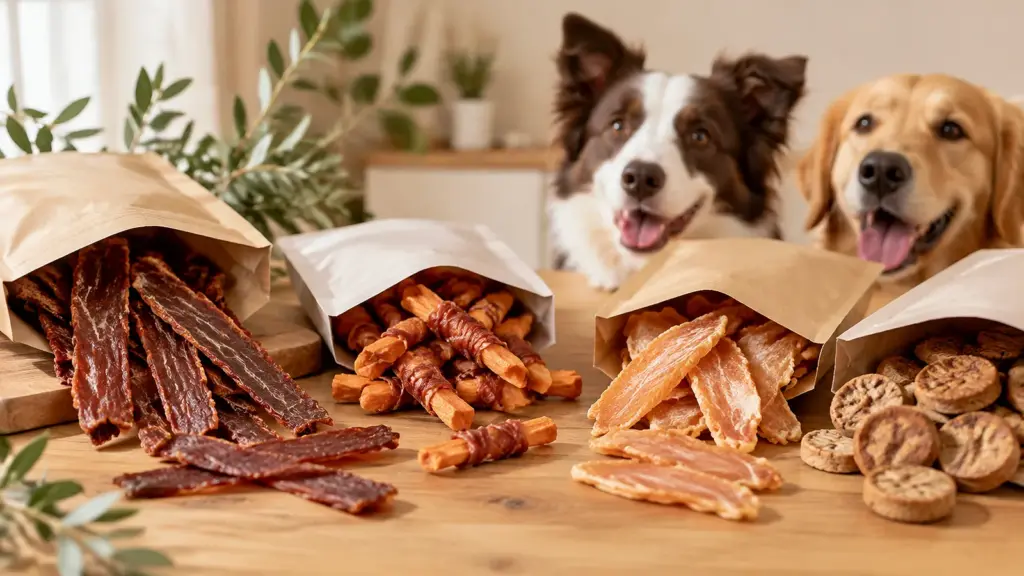
Private label dog treats are treats made by a specialist manufacturer and sold under your brand, so you own the name, the packaging and the customer while the factory handles recipes, production and food safety. A typical program runs from brief to shipped container in roughly two to three months: 2–3 weeks for samples, then 30–45 days of production once artwork is approved. This guide walks pet brands, importers and retailers through the models, the process, the formats that sell and the questions to ask before you sign.
Key takeaways
- Private label lets you launch a treat line without owning a plant: you control brand, positioning and price; the manufacturer controls recipe execution and food safety.
- Store brands are growing in the US, and Pet Care was PLMA’s top-performing store brand department by unit growth in 2025.
- The process has six steps: brief, recipe choice, samples, packaging and label compliance, production and QC, shipping.
- Single-protein jerky, wrapped treats, slices, rolls, biscuits and natural chews are the formats most private label ranges are built on.
- Judge a manufacturer on verifiable certificates, batch traceability, lab capability and export history, not on the quote alone.
What Are Private Label Dog Treats?
A private label dog treat is a finished product that a manufacturer produces to your specification and packs in your branded packaging. Your company name appears on the bag as the brand owner or distributor; the factory stays in the background. For the buyer, the appeal is simple: you get a market-ready product, backed by an established production line, without the capital cost of building one.
In practice, “private label” covers a spectrum. At one end you pick a recipe the factory already makes and put your label on it. At the other end the factory develops a formula that exists only for you. Most launches sit somewhere in between: a proven base recipe with adjustments to protein, shape, size, inclusions or pack format.
Private label vs white label vs OEM/ODM
The terms are used loosely across the industry, so it pays to agree on definitions with any supplier before you compare quotes.
| Model | Who owns the recipe | How much you customize | Speed to market | Best for |
|---|---|---|---|---|
| White label | Manufacturer | Packaging and branding only | Fastest | Testing a category or channel quickly |
| Private label | Usually manufacturer; tweaks agreed per project | Packaging plus shape, size, protein, pack size | Fast | Retailers and brands building a range |
| ODM | Manufacturer designs to your brief | New product concept developed for you | Medium | Brands that want differentiation without in-house R&D |
| OEM | You (your formula and spec) | Full: formula, process parameters, specs | Slowest | Established brands moving or adding production capacity |
Whichever model you choose, clarify in writing who owns the formula, the artwork files and any custom tooling, and whether the factory may sell the same recipe to other customers.
Why Brands Are Moving to Private Label
Store brands keep taking share in US retail. According to PLMA’s 2026 report based on Circana data, US store brand sales reached a record $282.8 billion in 2025, dollar share rose from 19.1% to 21.3% between 2021 and 2025, and Pet Care was the best-performing store brand department by unit sales growth in 2025 (up 5.4%).
For treat buyers, three practical drivers sit behind that trend:
- Margin control. Owning the brand means you set shelf price and keep the brand premium instead of paying it to a national label.
- Range agility. A factory with an existing recipe library lets you add a protein or format in weeks, not the year it takes to build a line.
- Customer ownership. Online sellers and specialty retailers build repeat purchase around their own brand, which is hard to do reselling someone else’s.
The trade-off is responsibility. As the brand owner you answer for label claims, compliance in your market and customer complaints, so the choice of manufacturer matters more than it does for simple wholesale.
The 6-Step Private Label Process
Most private label dog treat programs follow the same six steps. The timings below reflect how we run projects at our Qingdao plant; other manufacturers will differ, so ask for a written timeline before you commit.
1. Brief: market, pet, format, price point
A good brief saves weeks of back-and-forth samples. Include:
- Target market(s) and sales channel (grocery, pet specialty, e-commerce, club).
- Pet profile: dog size, life stage, any functional angle (dental, digestion, skin and coat, joint).
- Format and texture: jerky, wrapped, slice, roll, biscuit, chew; soft or crunchy.
- Protein and “free-from” requirements, for example single protein or grain-free.
- Target retail price and pack size, which together set your cost ceiling per kg.
- Expected annual volume per SKU.
2. Choose from existing recipes or develop a custom formula
Starting from a proven recipe is the fastest and lowest-risk route: the process parameters, moisture targets and shelf life are already validated. At SAGEIC we have a library of 1,000+ SKUs across seven series (chicken, duck, rabbit, pork, rawhide-based chews, fish, and beef and lamb), which is usually enough to shortlist several options that are close to a brief. A custom formula makes sense when you need a genuinely different product, but budget more time for development and shelf-life checks.
3. Samples and approval (2–3 weeks)
Expect 2–3 weeks from brief to samples in hand, plus courier time. Evaluate samples on more than looks:
- Moisture and texture, compared against the spec sheet.
- Guaranteed analysis (protein, fat, fiber, moisture) from the factory lab.
- Piece size and breakage in transit.
- Smell and color stability after a few weeks in an opened bag.
Approve a “golden sample” and keep it: it becomes the reference for every production lot.
4. Packaging and label compliance
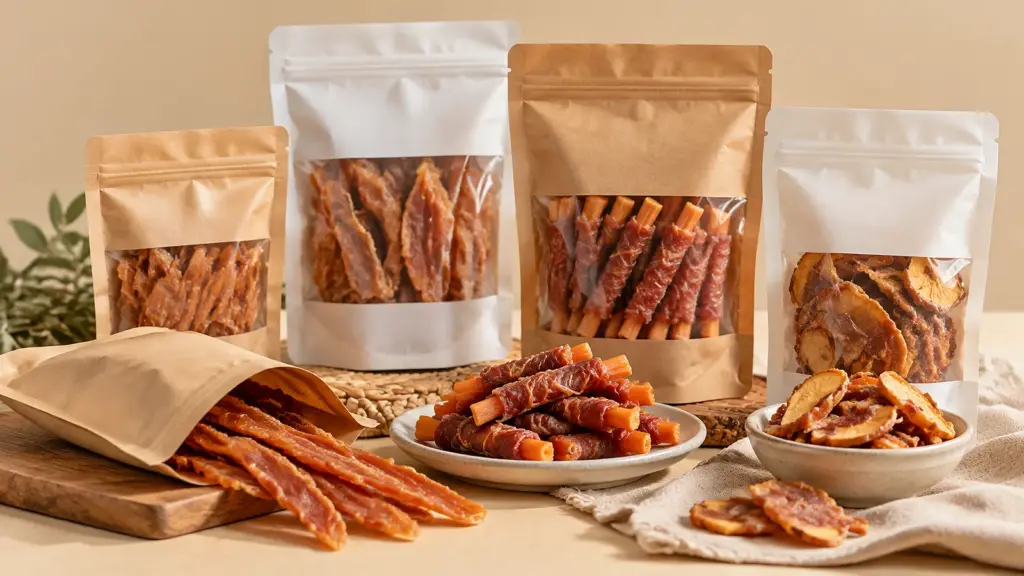
Choose the pack first, then design to it. Common options are stand-up pouches, zipper bags, PET jars, display boxes and bulk cartons. Nitrogen flushing with an oxygen absorber helps protect flavor and color over shelf life.
Label content is set by your destination market, and you as the brand owner are responsible for it. In the US, for example, AAFCO lists eight required label items, including product name, species, net quantity, guaranteed analysis, ingredient statement, nutritional adequacy statement, feeding directions and the manufacturer or distributor’s name and address, and state feed officials enforce them. Treats are usually labeled “intended for intermittent or supplemental feeding only.” Always check the latest official requirements, or have a regulatory consultant review the artwork. Our guide to dog treat label requirements covers the details.
5. Production (30–45 days) and QC
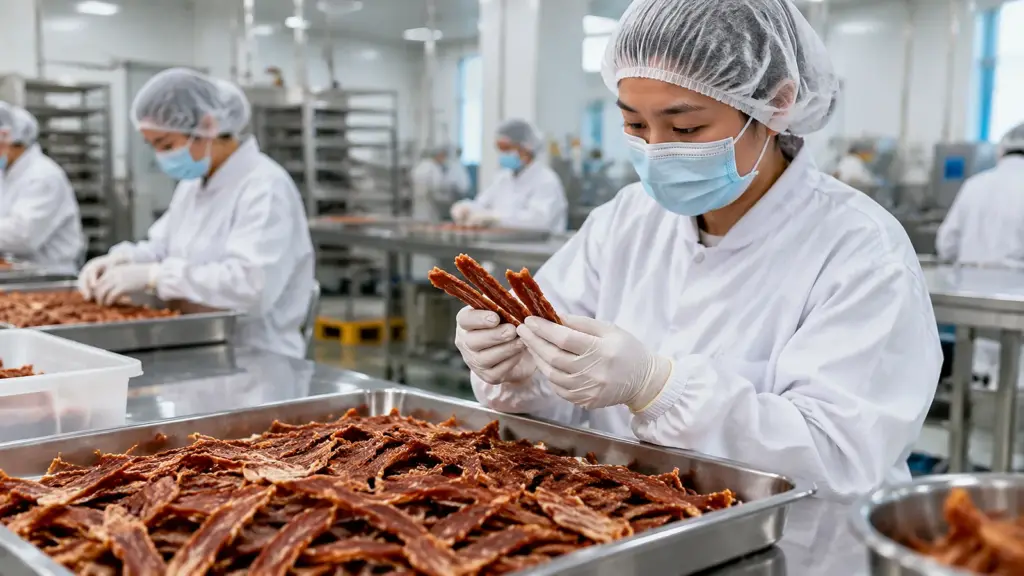
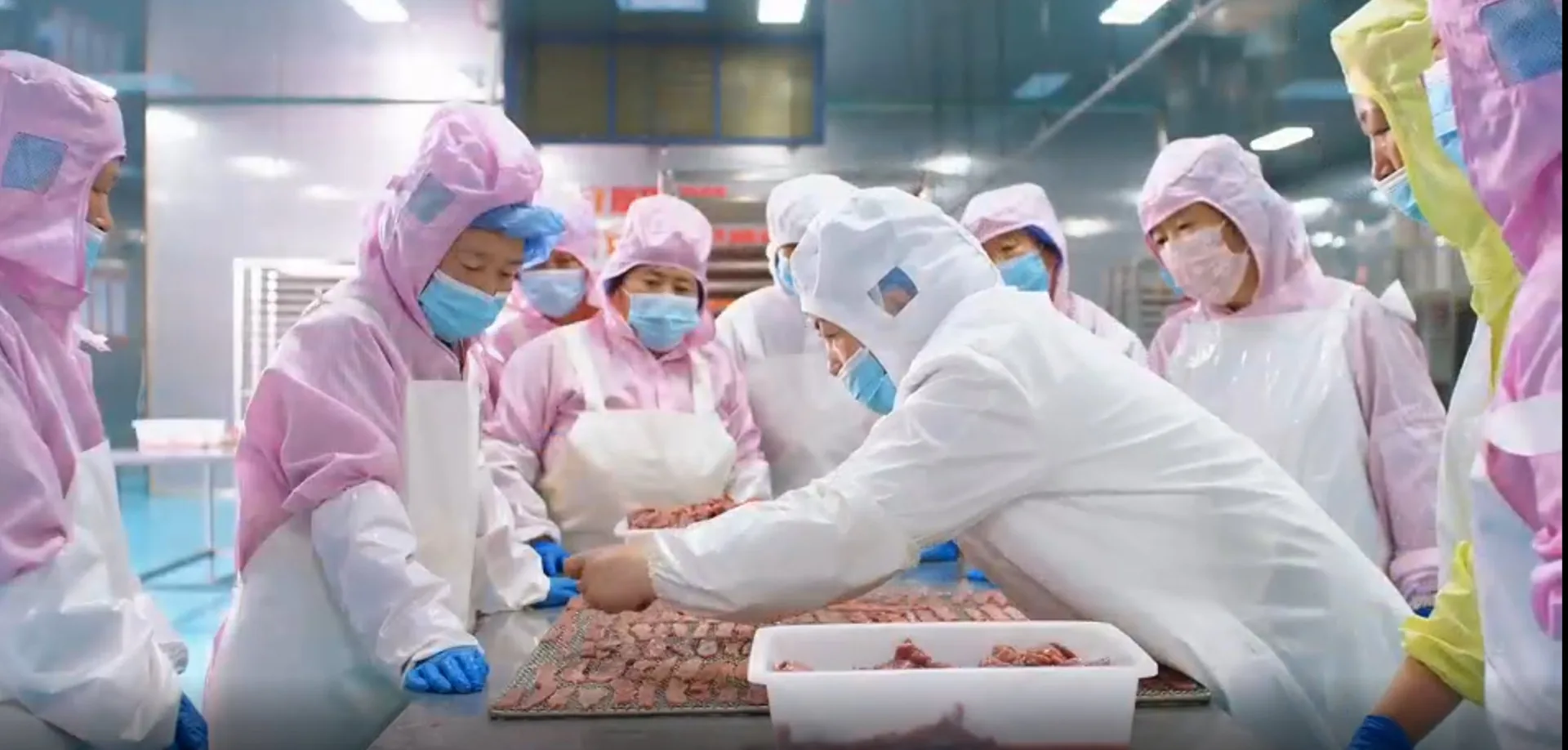
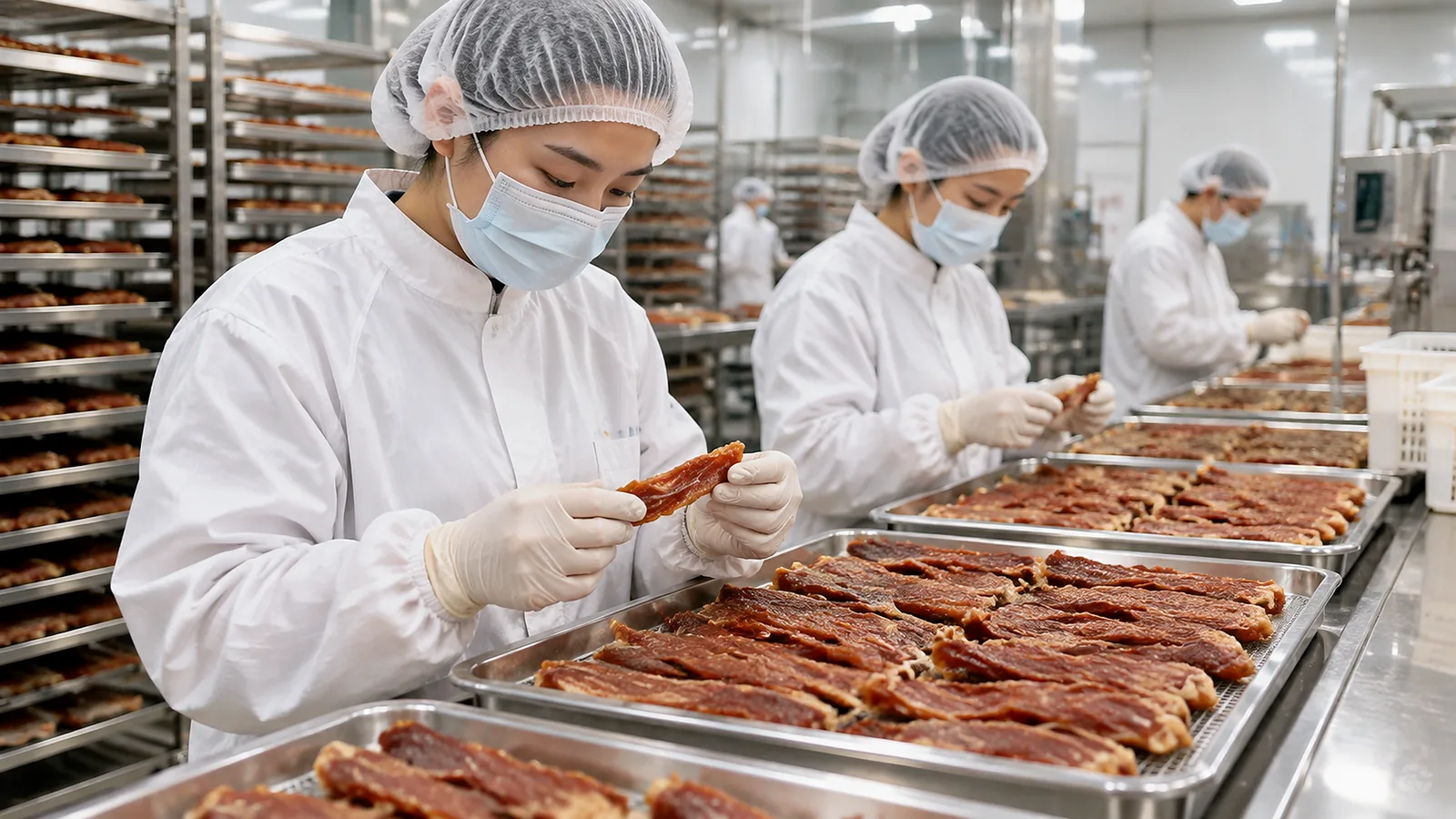
Once artwork and the golden sample are signed off, production typically takes 30–45 days, depending on the format and packaging lead times. What to expect from a serious manufacturer:
- Incoming raw material checks and documented supplier approval.
- In-process controls on thickness, drying time and temperature, and moisture.
- Finished-product testing for moisture, protein, fat and microbiology, with third-party testing (for example SGS or Intertek) available on request.
- Lot coding that links every carton back to raw material batches.
At our plant, fresh meat moves from source to production within three days, and batches are tracked through MES, ERP and WMS systems so a lot can be traced from finished carton back to raw material.
6. Shipping: FOB Qingdao / CIF
Most exporters quote FOB (you arrange ocean freight from the port of loading) or CIF (the supplier pays freight and insurance to your destination port). FOB gives you control over the forwarder and freight cost; CIF is simpler for first-time importers. Either way, your side still needs to handle import requirements in your market. For the US, FDA notes that animal food imports involve facility registration, prior notice and acceptable ingredients, and many animal-origin products need a USDA APHIS permit; see FDA’s importing animal food page and our article on importing dog treats into the US.
Popular Private Label Dog Treat Formats
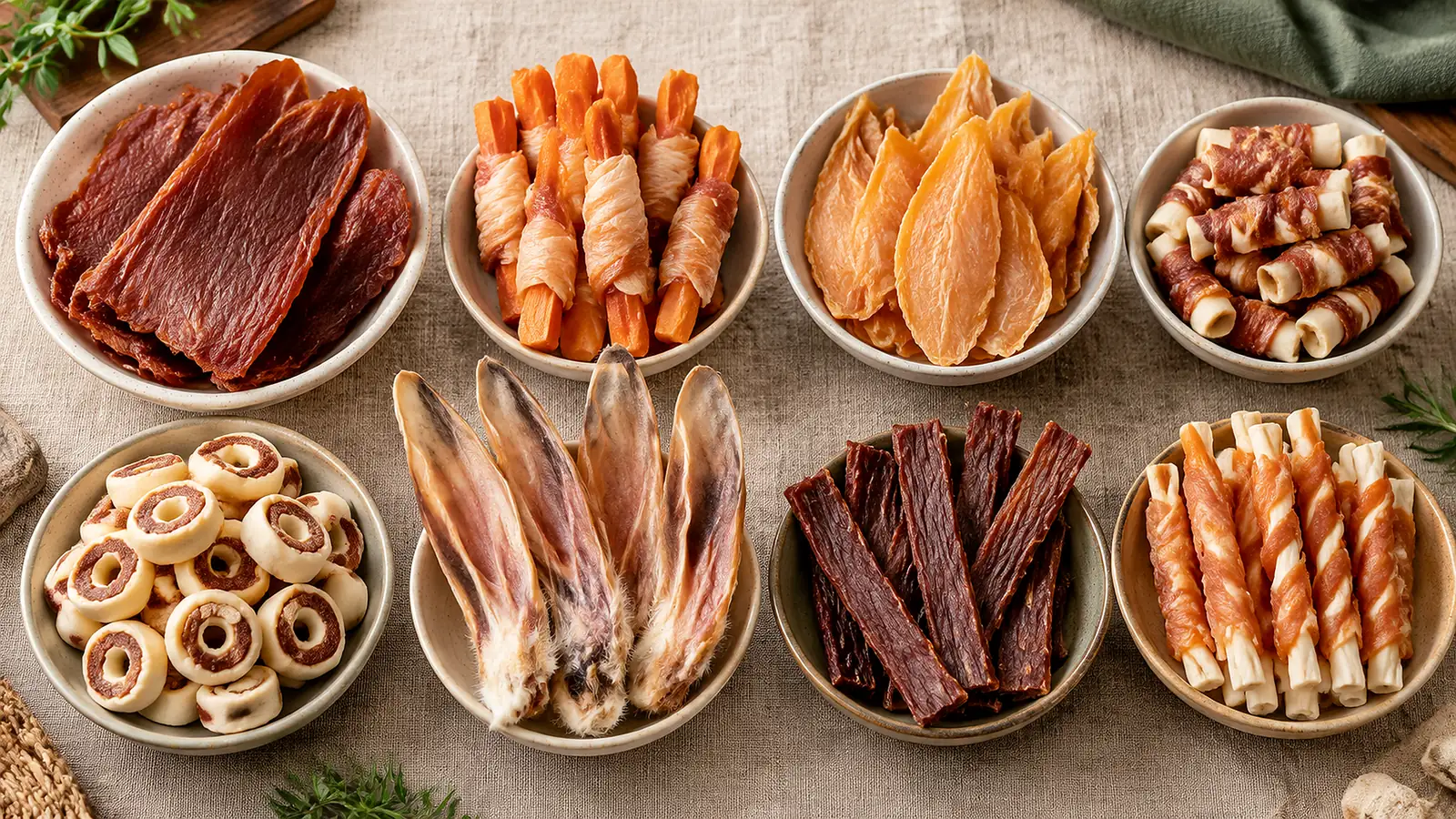
Most successful private label ranges combine one or two hero formats with a few supporting SKUs. Here are the formats buyers ask about most, with examples from our catalog.
| Format | Typical texture | Why buyers choose it | Example |
|---|---|---|---|
| Jerky and fillets | Firm, chewy | Short ingredient list, single-protein positioning | Whole Duck Fillet |
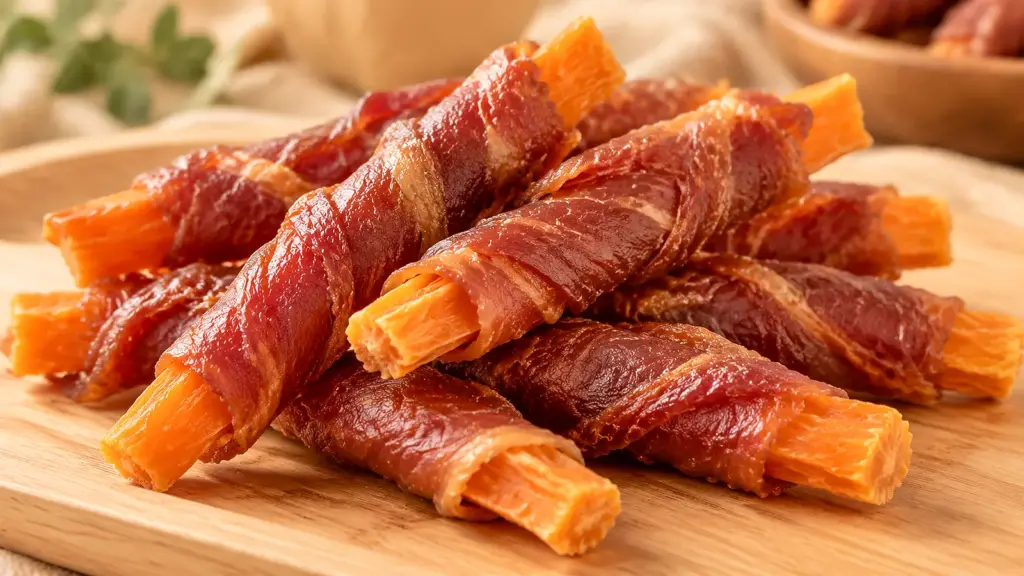
| Wrapped treats | Chewy meat over a firmer core | Strong shelf appeal, many core options | Duck-Wrapped Sweet Potato Sticks |
| Slices | Thin, easy to break | Training-friendly, easy to portion | Cranberry Chicken Slices |
| Rolls | Chewy, shaped | Visual differentiation in the bag | Chicken Snowflake Rolls |
| Biscuits | Crunchy | Familiar format, good price per piece | Goat Milk Biscuit Rings |
| Natural chews | Hard, long-lasting | Longer chew time, “natural” positioning | Rabbit Ear Bones |
Jerky and fillets. Whole-muscle chicken or duck breast, sliced and dried. These are the backbone of most ranges because the story is easy: one protein, minimal processing. Duck is a popular choice for brands that want a novel protein alongside chicken.
Wrapped treats. Meat hand-wrapped around a core such as sweet potato, rawhide, okra, apple or egg yolk. They photograph well and let you build a family of SKUs on one protein. Wrapping is labor-intensive, which affects cost; see our wrapped dog treats buyer’s guide.
Slices, rolls and biscuits. Good for filling price points and adding functional inclusions such as flaxseed or vegetables. Biscuits are also a natural bridge into cat or small-dog lines.
Natural chews. Rabbit ears, trachea and rawhide-based chews appeal to owners looking for longer chew time. Check destination-market rules for these animal by-products early, as requirements can be stricter than for muscle meat.
For duck-led ranges specifically, our duck dog treats wholesale guide goes deeper on specs. The full range is on our products page.
How to Evaluate a Private Label Dog Treat Manufacturer
A low quote from a factory that fails an audit or a customs inspection is the most expensive treat you will ever buy. Screen suppliers on evidence you can verify:
- Food safety certificates you can check. Ask for certificate numbers and verify them in the issuing body’s public directory. Read the scope: it tells you which products and processes the audit actually covered.
- Traceability. Ask for a mock recall: pick a lot code and see how quickly the supplier can trace it to raw material and customers.
- Lab capability. An in-house lab for moisture, protein, fat and microbiology, plus access to accredited third-party labs.
- Export track record. Experience shipping to your market means fewer surprises with documents and labels.
- Capacity headroom. Make sure your reorders will not be squeezed out by larger customers in peak season.
- Communication. Clear specs, written timelines and fast answers during sampling are a preview of how production will go.
For reference, our Qingdao facility holds BRCGS Food Safety Issue 9 certification (Grade B, certificate 0244974, issued by Intertek; scope covers thawing, slicing, drying and selection of duck breast pet food packed in PE/PET bags, valid to 2027-05-11), together with ISO 9001, ISO 22000 and HACCP. Details are on our quality page. For a full supplier checklist, read how to choose a dog treat manufacturer in China, and if food safety history is your main concern, see are dog treats made in China safe?
Costs and MOQs at a Glance
Minimum order quantities for dried dog treats are usually set per SKU and by weight, because each recipe needs its own line setup, raw material purchase and packaging run. At SAGEIC, the MOQ for private label is typically from 500 kg per SKU, and it is negotiable depending on the format and packaging.
Unit cost is driven by a handful of variables:
- Protein and meat content. Raw meat is usually the largest cost line, and dried meat treats need several kilograms of fresh meat per kilogram of finished product.
- Format complexity. Hand-wrapped and shaped treats need more labor than slices or biscuits.
- Packaging. Printed stand-up pouches with zippers, windows and nitrogen flushing cost more than bulk cartons, and printed films carry their own minimums.
- Testing and documents. Third-party lab reports and market-specific certificates add cost per shipment.
- Incoterms and duties. FOB vs CIF, freight rates and import duties in your market all change the landed cost.
We break these down, with a worked budgeting example, in private label dog treat MOQ and cost.
Launching Your Private Label Dog Treats: A Practical Checklist
- Write a one-page brief (market, channel, pet, format, price point, volume).
- Shortlist two or three manufacturers and verify their certificates.
- Request samples of existing recipes before paying for custom development.
- Test samples with real dogs and real customers, not just your team.
- Lock the spec: golden sample, moisture range, piece size, guaranteed analysis.
- Get artwork reviewed for your market’s labeling rules.
- Agree on Incoterms, payment terms (T/T or L/C are common) and a production timeline in writing.
- Plan your first order around one or two hero SKUs, then expand.
If you want to see how we structure OEM, ODM and private label projects, start with our private label dog treats and OEM/ODM service page.
Common Mistakes in a First Private Label Order
- Too many SKUs at once. Spreading the first budget over six products means six minimums and thin data on each. Two or three strong SKUs teach you more.
- Designing the bag before choosing the pack. Artwork built for the wrong pouch size or window position has to be redone.
- Approving on looks alone. A sample that looks right but runs at the wrong moisture can mold or harden on shelf. Approve against a written spec.
- Leaving compliance to the end. Label and import requirements affect claims, ingredient names and even which proteins you can sell, so check them during sampling, not after printing.
- Comparing quotes on different terms. An FOB price and a CIF price are not the same number. Compare landed cost per kilogram.
FAQ
What is the difference between private label and white label dog treats?
White label usually means an existing product sold under your brand with only the packaging changed. Private label is often used more broadly and can include changes to shape, size, protein or pack format. Agree on definitions with your supplier, especially on who owns the recipe.
How long does it take to launch private label dog treats?
At our plant, samples take 2–3 weeks and production takes 30–45 days after artwork is confirmed. Add ocean freight and your own label review, and most first launches land in roughly two to four months.
What is the minimum order for private label dog treats?
Many manufacturers set MOQs per SKU by weight. SAGEIC’s private label MOQ is typically from 500 kg per SKU and can be negotiated. Printed packaging may carry its own minimum, so ask for both numbers.
Can I sell private label dog treats made in China in the US and EU?
Yes, provided the product and supplier meet the destination market’s import and labeling rules, which differ between the US, EU and other markets. Requirements change, so confirm current rules with the relevant authorities or a customs broker before you order.
Do I need my own formula to start a private label dog treat brand?
No. Most brands start with a manufacturer’s proven recipe and adjust it. A custom formula is worth it once you know what sells and want a product competitors cannot easily copy.
Ready to build your private label dog treat range?
Send us your brief: market, format and target price. We’ll shortlist five ready-to-label recipes from our 1,000+ SKU library and ship samples in 2–3 weeks. Email sales@sageicbiotech.com or WhatsApp +86 150 9208 3750.