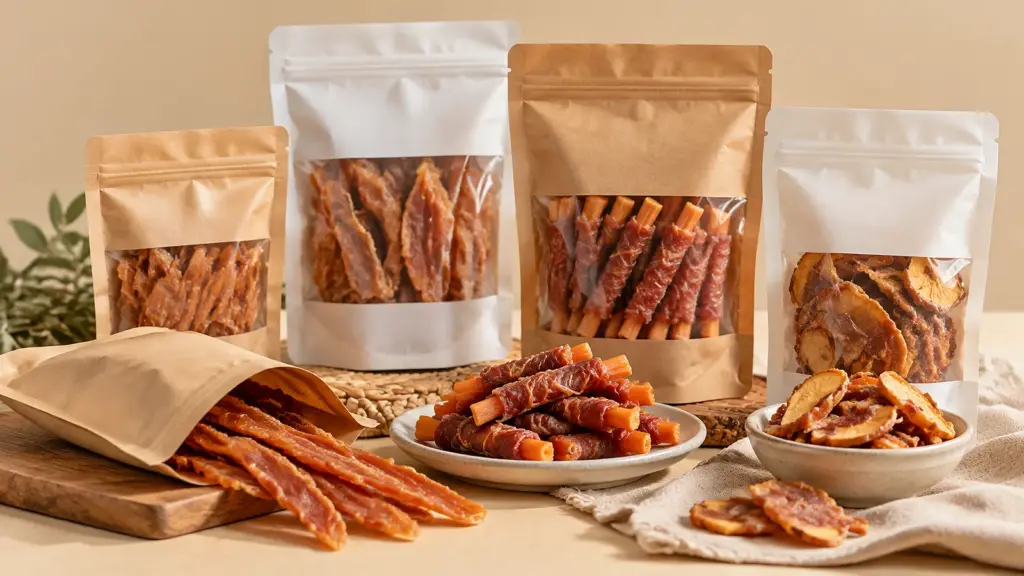
A US dog treat label has to carry a product name that follows the AAFCO naming rules, the words “dog treats” (or similar), a net quantity statement, a guaranteed analysis, an ingredient list in descending order by weight, a calorie statement, and the name and address of the manufacturer or distributor. The federal baseline is FDA’s 21 CFR 501. Most of the detail comes from AAFCO model regulations, which each state adopts and enforces through its feed law and product registration.
Key takeaways
- FDA sets the federal minimum: identity, net quantity, ingredients, and manufacturer or distributor. The states add guaranteed analysis, calorie content and more, through AAFCO-based rules.
- The percentage of the named meat determines the product name: 95% for “Duck Dog Treats,” 25% for “Duck Recipe” and similar descriptors, 3% for “with duck,” and a detectable amount for “duck flavor.”
- Treats clearly labeled as treats or snacks are exempt from a nutritional adequacy claim, but they still need a guaranteed analysis and a calorie statement per kg and per treat.
- Claims that a treat cures, treats or prevents disease turn it into an unapproved animal drug in FDA’s eyes. Keep claims to nutrition, taste and texture.
- The brand owner is legally responsible for the label. Rules change, so verify with your state feed control official or a regulatory consultant before printing.
Who Sets Dog Treat Label Requirements
FDA regulates pet food labeling at the federal level under 21 CFR Part 501, which requires a statement of identity, a net quantity statement, an ingredient list, and the name and place of business of the manufacturer, packer or distributor. FDA doesn’t pre-approve labels. AAFCO (the Association of American Feed Control Officials) writes model regulations that most states adopt into their feed laws. State officials then review labels during product registration and can refuse or remove products. AAFCO itself doesn’t approve, register or certify any product, so “AAFCO approved” on a pack is incorrect.
AAFCO has also adopted Pet Food Label Modernization (PFLM) model regulations. These add a “Pet Nutrition Facts” box and an intended-use statement, and AAFCO recommends a six-year transition. Each state adopts PFLM through its own rulemaking, so the older and newer formats will coexist for a while. If you are designing artwork now, ask your regulatory adviser which format your launch states expect.
The Required Elements on a US Dog Treat Label
The table below shows where each element goes on the pack and which rule it comes from. The principal display panel (PDP) is the front of the bag. The information panel is the panel immediately to the right of the PDP, which on stand-up pouches usually means the back.
| Label element | Where it goes | Main rule | Practical notes |
|---|---|---|---|
| Brand and product name | PDP | 21 CFR 501.3; AAFCO naming rules | The name’s wording has to match the formula percentages (see below) |
| Species designation (“for dogs,” “dog treats”) | PDP, conspicuous | AAFCO / state law | Can be part of the product name |
| “Treat” or “snack” designation | PDP, conspicuous | AAFCO | Exempts the product from a nutritional adequacy statement |
| Net quantity | Bottom 30% of the PDP | 21 CFR 501.105; AAFCO | Give US units (oz/lb) and metric (g/kg); count may be added |
| Guaranteed analysis | Information panel | AAFCO / state law | Min crude protein and fat, max crude fiber and moisture |
| Ingredient statement | Information panel | 21 CFR 501.4; AAFCO | Descending order by weight, using common or AAFCO names |
| Calorie content | Information panel | AAFCO / state law | kcal ME/kg and kcal per treat, “as fed” |
| Manufacturer / distributor statement | PDP or information panel | 21 CFR 501.5 | “Manufactured for” / “Distributed by” + city, state, ZIP |
| Country of origin | Conspicuous, legible, permanent | CBP marking rules | e.g., “Made in China” |
| Lot code / best-by date | Anywhere readable | Traceability and good practice | Must match production records for any recall |
Product Name Rules: 95%, 25%, 3% and “Flavor”
These rules, which FDA summarizes in its consumer guidance and states enforce through AAFCO regulations, cause the most rework on private-label artwork:
- 95% rule. “Duck Dog Treats” or “Chicken for Dogs” means the named ingredient makes up at least 95% of the product by weight, not counting water added for processing. If you name two ingredients (“Chicken & Duck”), together they must reach 95%, and they must be listed in order of predominance.
- 25% (“dinner”) rule. When the named ingredient is at least 25% but under 95%, the name needs a qualifying descriptor such as “Recipe,” “Formula,” “Dinner” or “Platter.”
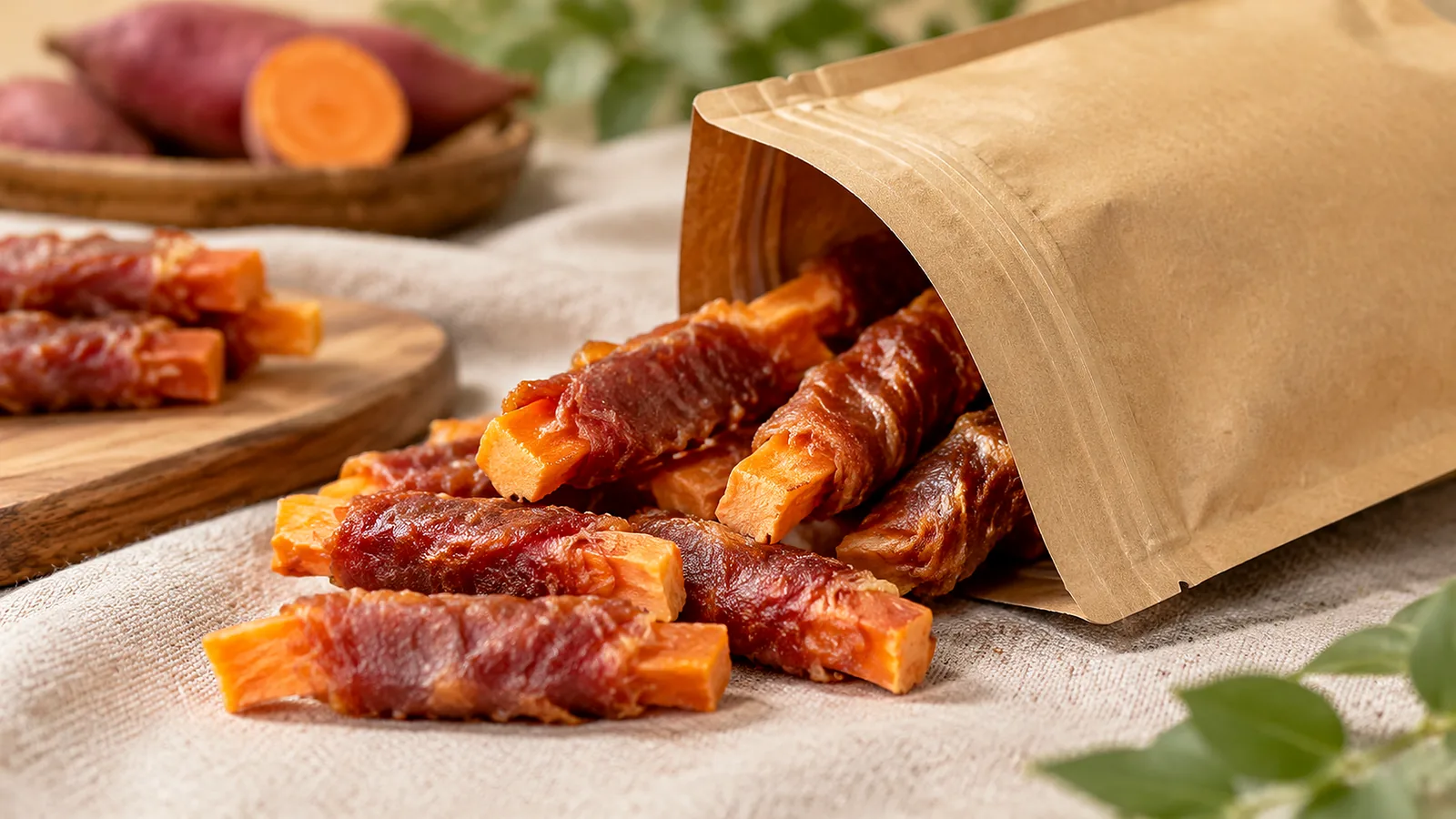
- 3% (“with”) rule. “Dog Treats with Sweet Potato” requires at least 3% of the named ingredient.
- “Flavor” rule. “Beef Flavor” requires no minimum percentage, but the flavor has to be detectable by a recognized method, and the word “flavor” must appear in the same size and style as the ingredient name.
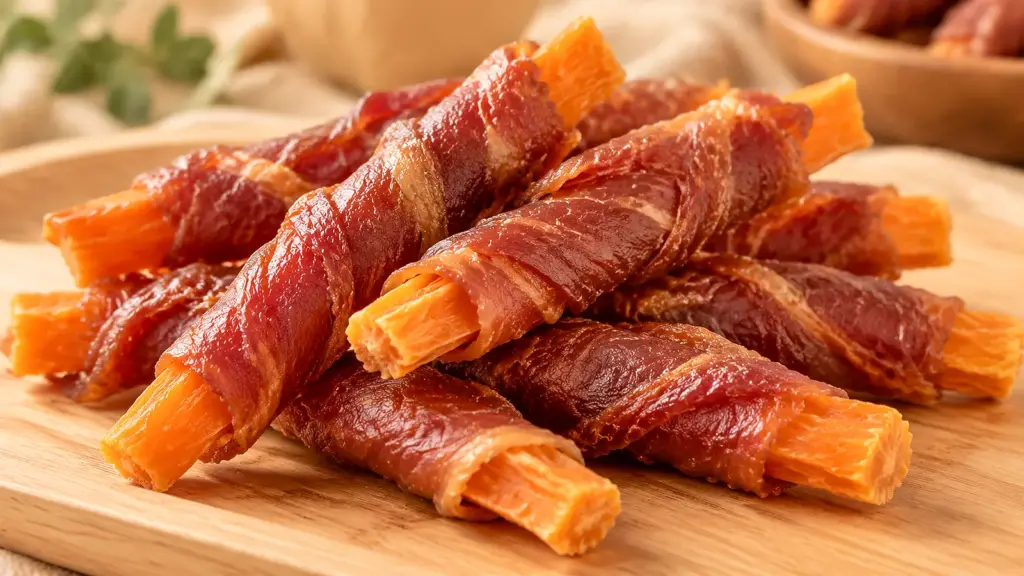
Here’s how that works on real formulas. Our whole duck fillet is made from 97% duck breast, so it has room under the 95% rule. Our cranberry chicken slices contain 3% cranberry, which is exactly the “with cranberry” threshold, so any drift in the formula would break the claim. Wrapped products, such as duck-wrapped sweet potato at 62% duck and 36% sweet potato, need a careful decision about whether the name should qualify as a two-ingredient 95% name or use a descriptor. If your artwork names an ingredient, ask your manufacturer for the formula percentages in writing.
Guaranteed Analysis for Treats
AAFCO regulations require every pet food, including treats, to state at least:
- Crude protein, minimum %
- Crude fat, minimum %
- Crude fiber, maximum %
- Moisture, maximum %
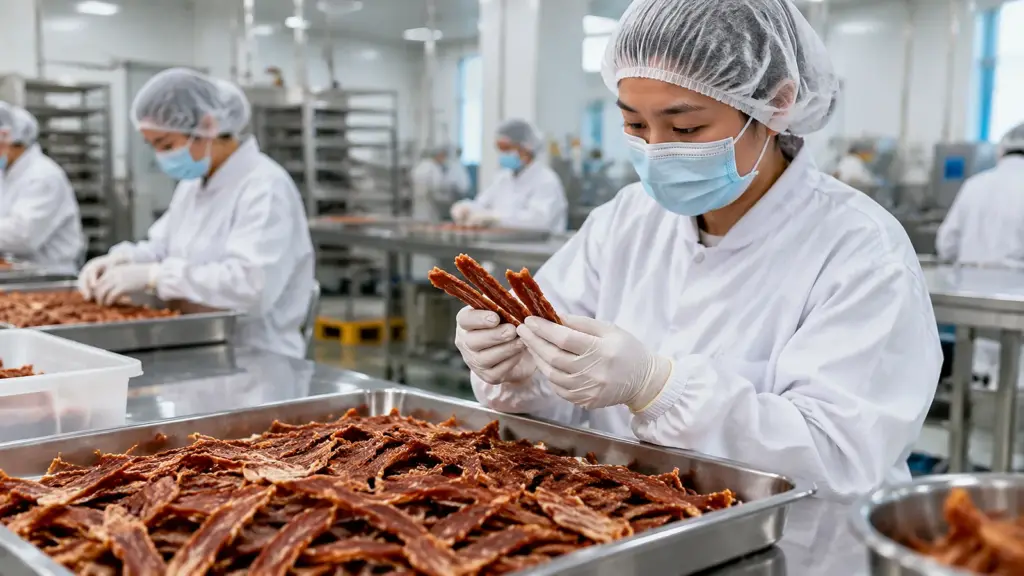
Additional guarantees, such as ash, glucosamine or omega-3, are needed if you make a claim about them. For dried meat treats, moisture matters most. It affects shelf stability, texture and mold risk, and a product that tests above its label maximum in a state sample is out of compliance. Set label guarantees with a margin against your production range, not against one good lab result. Our Qingdao lab tests moisture, protein, fat and microbiology on each batch, and we run third-party testing (SGS or Intertek) when a customer needs it. Those numbers are what we give brands when they set their guarantees.
Ingredient Statement
21 CFR 501.4 requires ingredients to be listed by their common or usual name in descending order of predominance by weight. AAFCO asks for names from the AAFCO Official Publication where one exists. In practice:
- Use specific names, such as “duck breast,” “sweet potato” or “vegetable glycerin.” Don’t use collective terms like “meat” or “natural stuff.”
- Declare processing aids and humectants such as glycerin and sorbitol if they are present in the finished product.
- An ingredient named in the product title has to appear in the list in a position consistent with the naming rule you rely on.
- If you plan to use a “natural” claim, check every ingredient against AAFCO’s definition of “natural.”
Nutritional Adequacy: When Treats Are Exempt
Complete-and-balanced foods need an AAFCO nutritional adequacy statement. According to AAFCO’s labeling guidance, products “conspicuously identified on the principal display panel as a snack, treat, or supplement” are exempt. This is why “Dog Treats” or “Dog Snacks” should be clearly visible on the front of the bag. If a product isn’t complete and balanced and isn’t labeled as a treat or snack, AAFCO rules require the statement “This product is intended for intermittent or supplemental feeding only.” Some treat brands print that line anyway to make the product’s role clear. Under PFLM, this purpose is served by the new intended-use statement on the front panel.
Feeding directions generally aren’t required for treats under the current rules, but a line such as “Feed as a treat; adjust daily meals to maintain ideal weight” is common and helps with retailer and state review.
Calorie Statement
AAFCO model regulations require a calorie content statement on dog and cat foods, including treats. It is expressed as metabolizable energy on an as-fed basis, both as kcal/kg and as kcal per unit (per treat or per piece). For irregular pieces such as fillets or wrapped sticks, agree on an average piece weight with your manufacturer, and check it against production samples so that “kcal per treat” isn’t misleading.
Claims to Avoid
FDA’s guidance on pet food claims is direct. Expressed or implied claims that a product will cure, treat, prevent or mitigate disease can make it a new animal drug, and a new animal drug needs approval. Examples that commonly cause trouble:
- “Prevents dental disease,” “treats arthritis,” “cures itchy skin,” “reduces anxiety”
- “FDA approved” or “AAFCO approved.” Neither agency approves treats.
- “Human grade,” unless every ingredient and the finished product are made, stored, handled and transported in line with human-food regulations. A pet food plant usually can’t support this claim.
- “Vet recommended” without substantiation, and “#1” or “best” claims you can’t document
Safer wording focuses on nutrition and the eating experience: “single-protein,” “chewy texture,” “made with duck breast,” and “helps clean teeth through chewing action” if you can substantiate it. Some states scrutinize dental and joint claims closely, so have claim language reviewed before artwork is final.
State Registration and Tonnage
Most states require pet food and treat products to be registered or the company to be licensed before the product is sold there. Some also require tonnage reports and inspection fees. The label is part of the submission, and state reviewers are the people who apply the AAFCO rules above. The distributor named on the label, usually the brand owner, is normally the registrant. Budget time and fees for every state you plan to sell into, including states where only your online sales ship.
Labels for Other Markets
A US label can’t be reused as-is elsewhere. The EU applies Regulation (EC) No 767/2009 on feed marketing and labeling, which uses different terms such as “complementary feed” for treats. Japan’s Pet Food Safety Act requires Japanese-language labeling, including country of origin and best-before date. Korea has its own feed labeling rules. If you plan a multi-market range, design the artwork so that the regulatory panels can be swapped per market. The market-specific import rules are covered in our guide to importing dog treats into the US, and other markets will follow in this series.
How Your Manufacturer Helps and Where Responsibility Sits
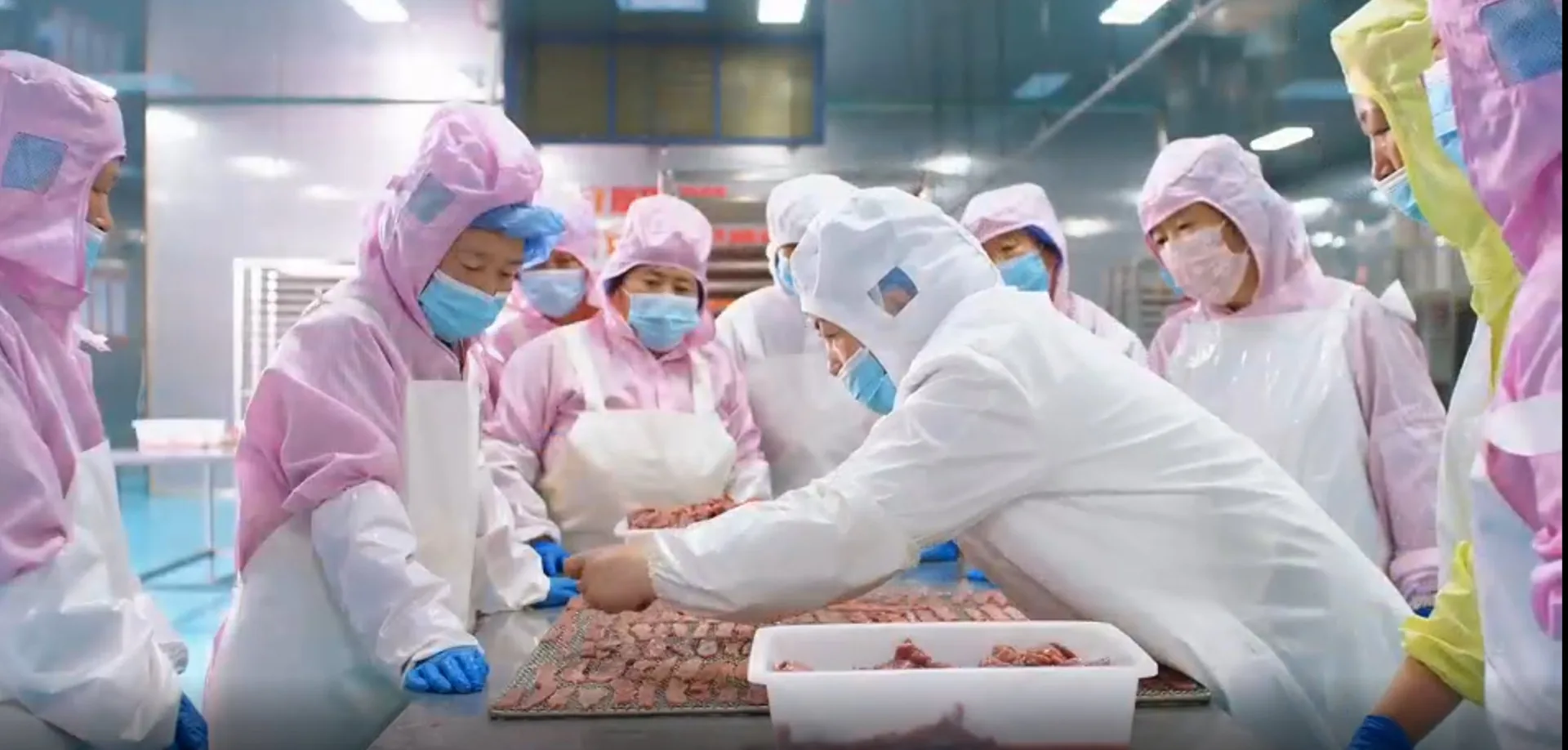
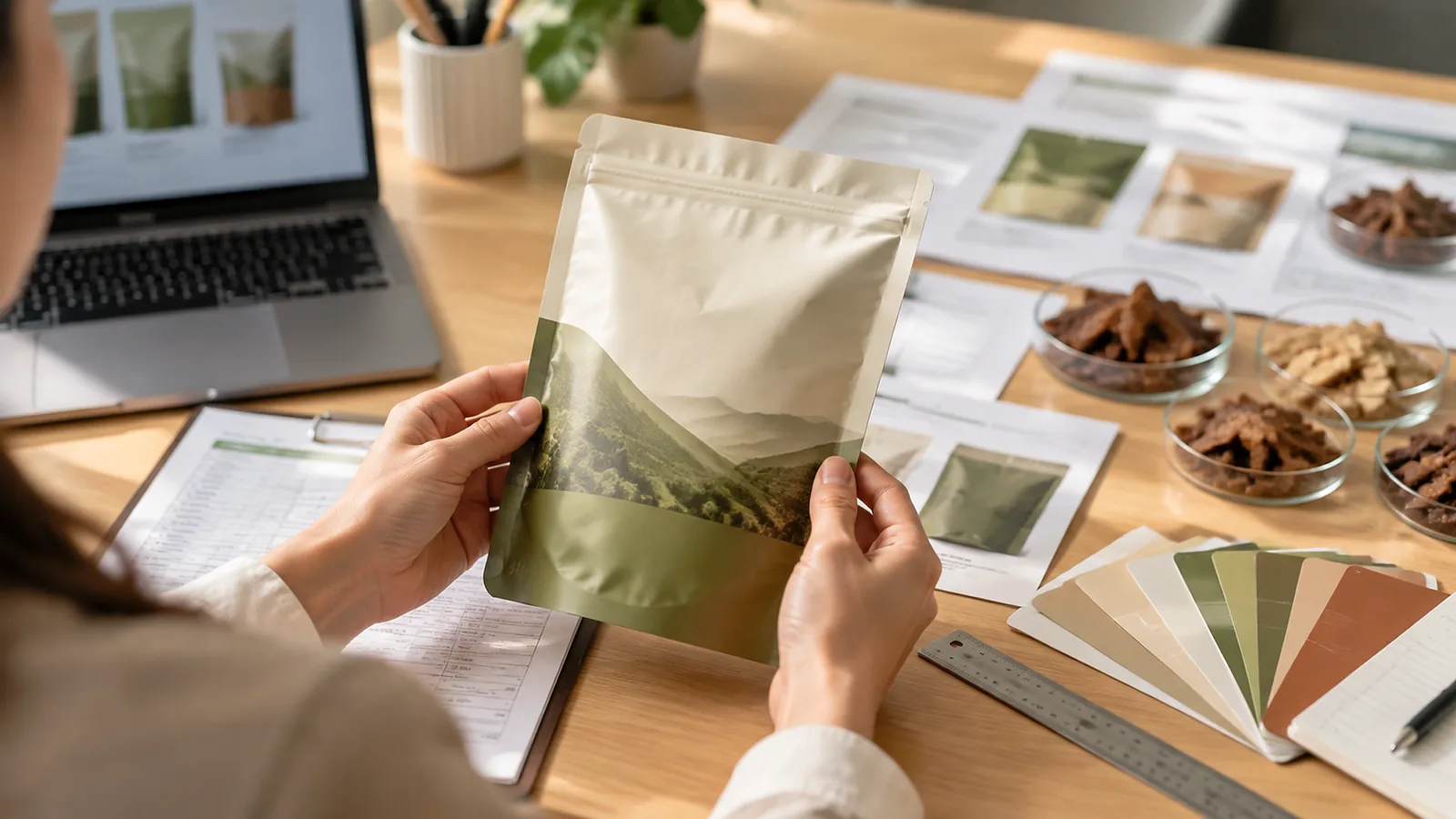
A good manufacturer supplies the data a label is built on: formula percentages, guaranteed-analysis ranges from batch testing, calorie calculations, ingredient names, and packaging dielines. Through our OEM/ODM service, SAGEIC prints your artwork on stand-up, zipper, PET-jar or display-box packaging, and we can adapt layouts to fit the regulatory panels. However, the brand owner or distributor named on the pack is legally responsible for the label’s compliance in each state. Have a US regulatory consultant or your state feed control office review the final artwork before print. For the full launch sequence from formula to first order, see the private label dog treats guide.
FAQ
Do dog treats need a guaranteed analysis?
Yes. State rules based on AAFCO require treats to show minimum crude protein and fat and maximum crude fiber and moisture. The treat exemption only removes the nutritional adequacy statement.
Is AAFCO approval required to sell dog treats?
No. AAFCO doesn’t approve products. States regulate treats through their feed laws, which usually means product registration and label review in each state where you sell.
Do treats need “intermittent or supplemental feeding only” on the label?
That statement is required for products that aren’t complete and balanced and aren’t conspicuously labeled as a treat or snack. If “treat” or “snack” is clearly on the front panel, the product is exempt. Many brands still use the line for clarity, and PFLM introduces an intended-use statement in its place.
Can I say my treats support joints or dental health?
Disease claims (“treats arthritis,” “prevents periodontal disease”) are drug claims and aren’t allowed on unapproved products. Softer structure or function wording can still draw scrutiny. Substantiate any claim and have it reviewed.
Who is liable if the label is wrong, the factory or the brand?
The company named on the label as manufacturer or distributor is responsible for its compliance. The factory is responsible for making the product to specification, including formula and guarantees. Keep both sides of that agreement in writing.
Meeting dog treat label requirements is mostly about consistency: the name, the guarantees and the ingredient list all have to match what’s in the bag, and what’s in the bag has to match what your manufacturer can reliably produce. Rules change, so verify with your state feed control official or regulatory adviser before each print run. To plan quantities for your first run, see private label MOQ and cost.
Building a US treat label?
Send us your target SKU and markets. We’ll share formula percentages, batch lab data and packaging dielines so your regulatory adviser can finalize the label before print.